
Levant Time logo

Articles

News feature image
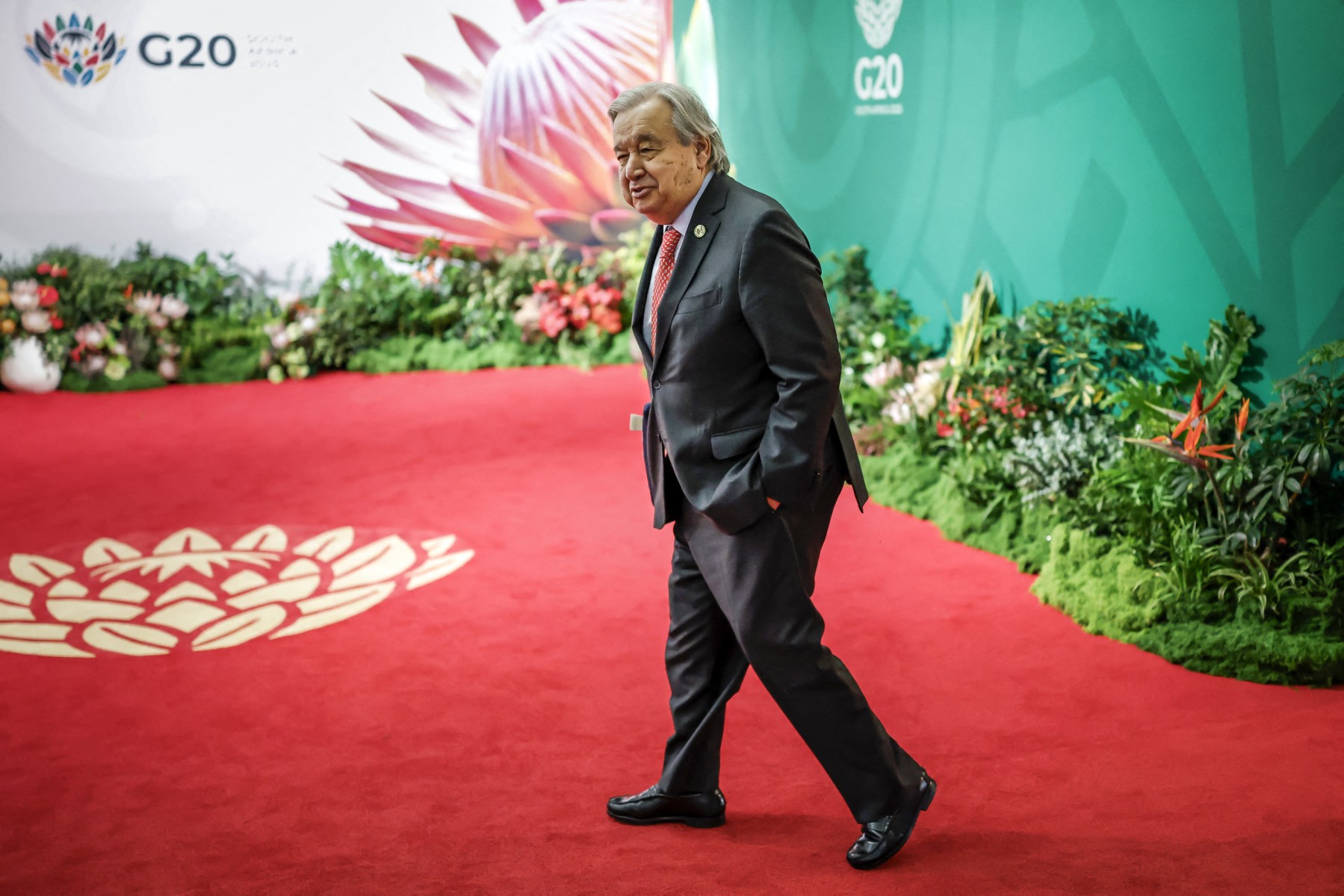
With less than three months remaining before António Guterres’s term ends on 31 December 2026, the race to succeed him is increasingly shaped by veto threats and Washington’s drive to fundamentally transform the United Nations. (Marco Longari / AFP)
Politics
Author portrait
By LevantTime .
Published Oct 20, 2026 - 19:52
Sylviane Zehil, New York The first color-coded ballot, held at the Security Council on 16 October, exposed the major powers’ opposition to the three frontrunners in the race to succeed António Guterres. None can now be sure of clearing the veto hurdle. With less than three months remaining before the deadline, diplomatic maneuvering is intensifying as the Trump administration seeks to influence the choice of a secretary-general capable of bringing about far-reaching change at the United Nations. In New York, the race to succeed António Guterres has reached a decisive turning point. The red ballots have spoken but have not revealed everything. For the first time since the selection process began, the five permanent members of the Security Council have made their opposition to the leading contenders for the UN’s top job more apparent.
Today's Essential
Author portrait
By LevantTime . - Published Oct 20, 2026 - 00:51
News feature image
Built in the 19th century, Limoges City Hall is listed as a historic monument. It was largely destroyed in an arson attack by radicalized and violent rioters, according to the authorities. (AFP)
The French government announced its first measures on Monday in response to the weekend riots in several cities across the country, starting with “partial” and “localized” curfews, even as the possibility of declaring a state of emergency was raised. President Emmanuel Macron, who is touring the Gulf states, reportedly preferred not to declare a state of emergency to avoid spooking the markets, especially since Paris had very recently announced an increase in its debt and public deficit. Political or security instability would certainly affect interest rates. The “chaos” is “confined to very specific urban areas,” Prime Minister Sébastien Lecornu said. He said he had “asked prefects to impose a number of curfews tonight,” Monday, specifying that they would be “localized” and “partial.”
Economy
Author portrait
By Bernard Raymond Jabre - Published Oct 19, 2026 - 19:26
News feature image
The Peterson Foundation’s famous US national debt clock in Atlanta displays the astronomical figure of $40 trillion on September 8, 2026. (Derek White / Getty Images via AFP)
Debt is taking the blame. We watch trillions pile up in the United States, France, Italy and elsewhere in Europe, and wonder how far it can go. But debt is not the disease. It is the symptom. The disease is a budget deficit that has become permanent. We need to go back to Keynes. John Maynard Keynes never envisioned deficits as a normal, permanent feature of government. His thinking was rooted above all in the economic cycle. When the economy collapses, private investment dries up, unemployment rises, and fear paralyzes businesses and households, the state must step in. It spends, invests and accepts a temporary deficit. Monetary policy can also become more accommodative.
More Articles
Sort By: NewestOldest
The Pope in Lebanon: Without Peace, the “Message-Country” Will Not Survive

Pope Leo XIV is set to bring a powerful message to Lebanon: “Blessed are the peacemakers.” A unifying call, with deep religious resonance, that resonate cross its religious communities, while carrying a clear political weight for a country exhausted by decades of conflict – a nation for whom the time has come to leave the tunnels of violence behind and step into the light of peace. Firstly: Supporting the Christian Presence and Affirming Its National Role This message stems from the Holy See’s careful attention to what Lebanon has endured – and continues to endure – particularly its Christian population. For the Vatican, Lebanon is the most sensitive “laboratory” in the Middle East for Muslim–Christian coexistence, and a potential model of what John Paul II, three decades ago, described as a “message-country.”

/