
Levant Time logo

Articles

News feature image
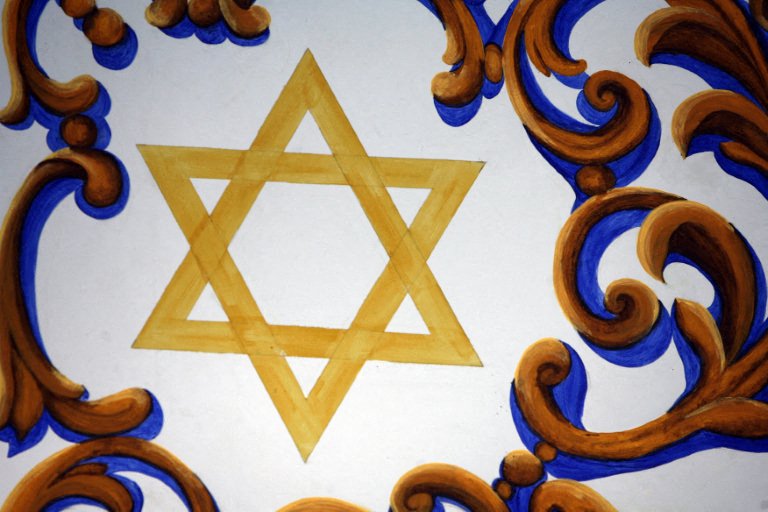
The Star of David painted on a wall inside the Magen Abraham Synagogue, ocated in the former Jewish quarter of Wadi Abu Jamil, in Beirut (Photo JOSEPH EID/AFP).
Society
Author portrait
By Makram Rabah
Published Oct 25, 2026 - 01:06
Lebanon’s claim to be a refuge must be measured by its ability to protect the right of all its citizens to live freely, without concealing their identity, justifying their presence or repeatedly proving their loyalty. When a community leaves because its members can no longer imagine a safe future at home, Lebanon loses part of its meaning and its capacity to accommodate difference. Rhetoric about diversity and coexistence cannot compensate for that failure. These questions shaped the discussion of Nada Abdel Samad’s book, When the Jewish Balconies of Wadi Abu Jamil Went Dark , at the American University of Beirut, organized by the Department of History and Archaeology and the History and Archaeology Student Society. The gathering confronted what we often prefer not to see: how a Jewish neighborhood disappeared from public memory, and how a Lebanese community’s departure became a footnote, despite what it reveals about our society, our state and our political discourse.
Strategia
Author portrait
By Khalil Helou - Published Oct 24, 2026 - 23:36
News feature image
An Orthodox choir takes part in a procession during celebrations on the eve of the Ethiopian festival of Meskel, equivalent to the Feast of the Cross in the Levant, in Addis Ababa, Ethiopia’s capital. (AFP)
Since April 2023, the conflict between the Sudanese Armed Forces (SAF), commanded by General Abdel Fattah al-Burhan, and the Rapid Support Forces (RSF), led by General Mohamed Hamdan Dagalo, known as “Hemedti,” has plunged Sudan into a destructive spiral. By October 2026, this civil war had become the world's worst humanitarian crisis. The country's strategic position, where the Red Sea meets the Nile Basin, combined with its vital mineral resources, particularly gold, makes it a major geopolitical linchpin. The prolonged collapse of state institutions threatens stability across the Horn of Africa and the Sahel, intensifying international security concerns.
Decryption

United States - Iran, the war of last resort?

Signs of renewed hostilities as “Iranians struggle to feed themselves”
Author portrait
By LevantTime . - Published Oct 24, 2026 - 23:25
News feature image
A masked Iranian portrays US President Donald Trump inside a symbolic prison cell installed on a billboard in northern Tehran, Iran. (AFP)
Bellicose statements from senior U.S. officials, followed by the deployment of substantial naval forces to the region, warnings to American citizens in the Gulf, and a heightened state of alert among Israeli forces, whose air force has conducted “maneuvers” near Iran’s borders… The United States appears to be preparing to resume large-scale strikes against Iran. For several weeks, Washington and Tehran have been confronting each other primarily at sea: the United States is blockading Iranian ports, while the Islamic Republic is trying to exert control over the strategic Strait of Hormuz. Neither country has launched a major attack on land targets since early September, but that could soon change.
More Articles
Sort By: NewestOldest
Will the US Federal Reserve Lose Its Independence?
By
Jacques Mechelany
Published

For more than seven decades, the US Federal Reserve stood as a fortress at the core of America’s economic success: the steward of the world’s reserve currency and the institution markets trusted to anchor financial stability. It acted as lender of last resort with a dual mandate – controlling inflation on the one hand, supporting economic growth on the other. For most of this period, monetary policy was entrusted to independent professionals, formally insulated from both the executive and legislative branches of government. That independence, however, was never a constitutional given. It was a carefully constructed institutional equilibrium – one that markets gradually came to treat as permanent.

In the Event of a US Attack, Moscow and Beijing Will Not Come to Iran's Aid

Although Russia and China are among Iran's major strategic partners, their support for the Islamic Republic, weakened by internal protests and under threat from Donald Trump, would remain limited in the event of an American attack. According to several experts, neither Moscow nor Beijing is willing to confront Washington militarily. Iran nevertheless holds a significant place in the geopolitical calculations of the two powers. Tehran contributes to the Russian war effort in Ukraine by supplying the famous 'Shahed' type drones that have greatly served Moscow's troops. Iran also came to Putin's rescue by re-exporting Scud-type ballistic missiles once acquired by the Islamic Republic, which produced a modernized version of them.

Maliki's False Return to Iraq: Soudani Seeks a Scapegoat

Mohammed Shia al-Sudani's game in Iraq was not a mere clever political maneuver or a misjudgment, but a meticulously planned political conspiracy, orchestrated from within a corrupt system, to reproduce power by causing failure and profiting from it. Sudani is not external to the system that destroyed the state, nor above it, but rather at its very heart, benefiting from its mechanisms and mastering its methods. What distinguishes him from others is not integrity, but his ability to manage corruption discreetly and without fuss. Nouri al-Maliki's return to the forefront of power was neither a coincidence nor a forced compromise. It was a carefully calculated maneuver. Maliki, with his heavy legacy, unresolved files, and widespread popular rejection, was the ideal candidate to bear the burden of the imminent collapse. He was not called to succeed, but to perish. He was not recalled to lead, but to serve as a scapegoat, to bear responsibility for the failures, thereby preparing the ground for his downfall and the dismantling of the entire coordination mechanism.

Iran: Facing State Terrorism, End the Complacency

Thus, after the 'brilliant' military performance (!) of the 'support war' for Hamas and Gaza, Sheikh Naim Kassem now promises us a new 'support war,' but this time with the objective of coming to the aid of an even more distant regional actor: Ayatollah Khamenei and the Islamic Republic of Iran. The leader of Hezbollah has therefore decided, or rather has announced (since he is not the one who decides on such matters…), that the Lebanese must show blind self-sacrifice, without any limit, up to the ultimate sacrifice, to 'defend' (?) a foreign force… For all those who still had some doubts in this regard, or who refused to acknowledge the truth, Sheikh Naim Kassem has just brilliantly confirmed what was, for informed observers, a truism: Hezbollah is not a Lebanese party. Its members are indeed Lebanese, but its political decisions, its line of conduct, its political project, are transnational and take no account of local realities or the higher interests of the Land of the Cedars.

The Looting of the Iraq Museum: A Major Cultural Disaster

The looting of Iraq’s National Museum in 2003 led to the loss of priceless artefacts and triggered a domino effect, manifested in the widespread plundering of archaeological sites across the country. This, in turn, fueled the international trafficking of antiquities and severely hampered scientific research in the field. The episode has since become an emblematic case of the political responsibility borne by occupying forces in wartime, the emergence of an economy built around the illicit antiquities trade serving organized crime and terrorism, and, in parallel, the development of a “recovery diplomacy” involving international cooperation to secure the return of stolen objects.

For a return to the political legacy of Mohammed Mehdi Chamseddine

Lebanon and, more specifically, the Shiite community commemorated a few days ago the 25th anniversary of the death, on January 10, 2001, of the former president of the Supreme Shiite Council (SSC), Imam Mohammed Mehdi Shamseddine. The man who was, for more than two decades, the spiritual leader of the Lebanese Shiite community, succeeding Imam Moussa Sadr – who mysteriously disappeared during a visit to Libya in 1978 – left behind a political 'will' whose existence and true scope are ignored (or concealed...) by many Lebanese and foreigners, particularly in academic and journalistic circles. The historical and truly existential dimension of this legacy is highlighted by the dramatic developments currently unfolding in Lebanon and the region.