

Levant Time
Study
'%3e%3cpath%20d='M29%2034.583C29%2031.4004%2027.7884%2028.3482%2025.6317%2026.0977C23.4751%2023.8473%2020.55%2022.583%2017.5%2022.583C14.45%2022.583%2011.5249%2023.8473%209.36827%2026.0977C7.2116%2028.3482%206%2031.4004%206%2034.583'%20fill='%23083D77'%20fill-opacity='0.12'/%3e%3cpath%20d='M17.5%2022.583C21.6421%2022.583%2025%2019.2251%2025%2015.083C25%2010.9409%2021.6421%207.58301%2017.5%207.58301C13.3579%207.58301%2010%2010.9409%2010%2015.083C10%2019.2251%2013.3579%2022.583%2017.5%2022.583Z'%20fill='%23083D77'%20fill-opacity='0.12'/%3e%3c/g%3e%3c/svg%3e)
By Khalil Helou - Published Oct 10, 2026 - 10:23 - Updated Oct 10, 2026 - 10:24
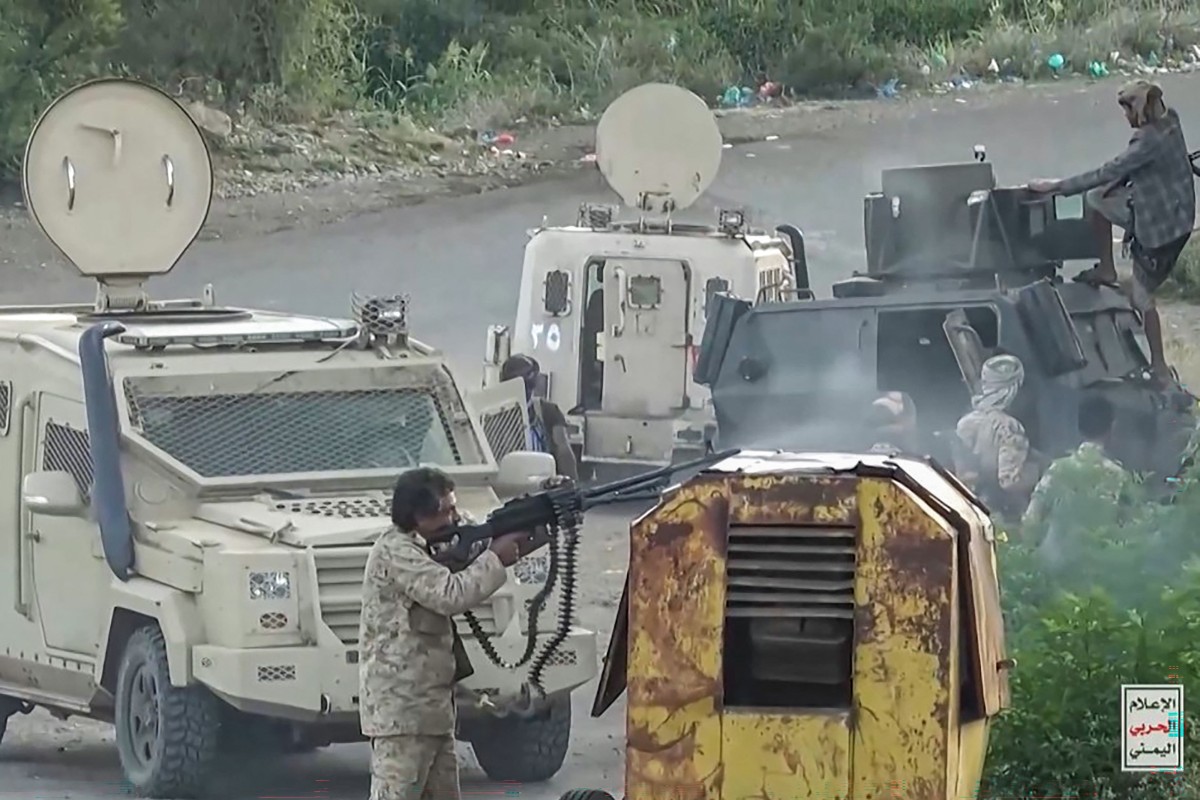
This screenshot, taken from a video released by Ansarullah's Media Center on October 7, 2026, shows a fighter affiliated with the Houthi authorities firing a machine gun during an advance against Saudi-backed Yemeni government troops in the Taiz governorate, according to Houthi media. (via AFP)
Analyze
By Rabih Dandachli - Published Oct 8, 2026 - 03:14
In Lebanon, moderation is summoned whenever the country approaches the brink of explosion, only to recede once the distribution of power begins. Moderates are asked to calm tensions, smooth over differences, and keep the doors of dialogue open, while the forces most capable of obstruction are left to determine the terms of the settlement. In this sense, moderation is assigned a role in containing crises without necessarily having the ability to alter the conditions that produce them.
This is where its fundamental crisis lies. A moderation that limits itself to preventing the worst remains bound by other people’s agendas. It waits for escalation before calling for calm, for obstruction before seeking a way out, and for division before proposing common ground. These roles may be necessary in moments of danger, but they are not enough to build a future. Lebanon needs a form of moderation that has a vision of government, that can take the initiative, confront challenges, and organize, and that can explain to people what will change in their lives if they place their trust in it.
For that to become possible, moderation must be freed from the confusion that equates it with simply standing halfway between opposing sides. In disputes over spending priorities, economic policies, or the management of public utilities, multiple legitimate choices exist, and compromise is part of democratic politics. But when the issue concerns the primacy of the state, the submission of everyone to the law, and citizens’ right to choose their representatives without intimidation, compromise should concern the means of applying these rules, not the principle of adhering to them. Here, moderation is clear about its objective, gradual in its methods, and accountable for the consequences of its actions.
This distinction is essential when it comes to Hezbollah’s weapons. The state’s monopoly over military force and over decisions of war and peace is a basic condition for the existence of a national authority accountable to its citizens. Upholding this principle does not require hostility toward Hezbollah’s social base, nor does it justify ignoring Israeli attacks or the fears experienced by the people of southern Lebanon. Rather, it requires a serious answer as to how they are to be protected, how the army is to be strengthened, and how the conditions for stability, return, and reconstruction are to be secured. Firmness in principle must be accompanied by political, security, and social action that makes the transition to the state both possible and credible.
Yet moderation loses its credibility if it is firm toward weapons while remaining tolerant of the capture of institutions. Calls for a single authority are inconsistent with treating the administration as a system of political shares, the judiciary as a shield, and public funds as a source of influence. The state that the Lebanese are being asked to trust must itself change. President Joseph Aoun’s inaugural address linked the monopoly of arms with reform of the administration. The political task is to turn that connection into a program of action, so that citizens feel that restoring the authority of the state also means restoring their rights within it.
This is where the deeper issue emerges. Citizens may want the state, yet remain tied to the leader or party that meets an immediate need. When access to medical treatment, employment, or the completion of an administrative procedure depends on mediation, the political relationship becomes part of managing everyday life. It is not enough to urge people to free themselves from clientelism without providing them with a reliable alternative. Those who can afford to do without an intermediary can easily condemn dependency. Those who need one to gain admission to a hospital pay for their independence with their own and their family’s security.
Building moderation therefore requires reducing the cost of citizens’ independence. Every public service delivered as a clearly established right, every job made available on the basis of merit, and every administrative procedure completed without intervention expands the space in which Lebanese citizens can make political choices freely. In this sense, institutional effectiveness becomes part of changing the balance of power. Political loyalty takes on a different meaning once it is no longer a condition for obtaining the most basic rights.
For the same reason, moderation needs a clearly defined economic and social content. The word “reform” is not enough unless it is explained who bears the burdens, who receives protection, and how opportunities are distributed. In the financial crisis, for example, progress toward an agreement with the International Monetary Fund is a path with clear legislative and financial requirements. But a political project must also be judged by its position on the distribution of losses, the protection of small depositors, accountability, and the restoration of financing for productive activity. Any settlement that hides these choices behind technical language leaves people outside the decision that will determine their future.
Moderation has sometimes been associated in many people’s minds with the ability to reach an understanding with everyone. Yet any serious reform will collide with the interests of groups that benefit from the status quo, and any removal of a privilege, opening up of competition, or subjection of appointments to publicly declared criteria will generate opposition. The moderate therefore needs to accept the cost of taking a position. Anyone who makes the approval of all political forces a condition for action gives every vested interest the power to block it. This confrontation can be pursued within the law, with clear arguments and openly declared alliances, without sectarian mobilization or accusations of betrayal.
This leads to the link that is so often missing: organization. It is not enough to have respected figures, experts with solutions, or a public exhausted by conflict. The political capacity of a moderate current requires institutions that bring these people together around common priorities, distribute responsibilities, choose representatives, and hold them accountable after they reach power. It also requires a permanent presence in municipalities, trade unions, universities, and neighborhoods, where trust is built through accumulated work.
Nor should this presence reproduce networks of loyalty under a new label. If moderates provide services in exchange for support, they have adopted the very mechanism they criticize. Their role is to help people gain access to their rights, expose the reasons those rights are obstructed, and work to make them available to everyone. They also need transparent financing, internal rules for accountability, and leadership rotation. A project that calls for a state of institutions should demonstrate in its own structure the ability to move beyond the dominance of a single individual.
It is also wrong to assume that a ready-made moderate majority exists, waiting for someone to speak on its behalf. Fear of war does not mean agreement on defense policy, and rejection of corruption does not automatically produce agreement on economic reform. Such a constituency must be built through dialogue over interests and choices and by testing cooperation on specific issues. It may bring together people who disagree on many matters but agree on the primacy of the state and on the rules of political competition and accountability. This agreement allows them to manage their differences without turning them into mutual threats.
Moderation also cannot be confined to one sect or place on a single community the permanent burden of compromise. It needs partners within different constituencies who acknowledge their fears without turning them into justifications for permanent privileges. It needs a discourse that protects people’s right to their identities and affiliations while affirming that their political and civil rights do not pass exclusively through the leaders of those communities.
In this sense, moderation becomes a project for changing the way power is exercised: from bargaining over shares to competition over programs, from protection granted by an influential patron to a right guaranteed by an institution, and from settlements that postpone conflict to rules that allow it to be resolved. Such a project requires patience, but it also requires declared deadlines and objectives, so that gradualism does not become yet another pretext for delay.
The real test of Lebanese moderation begins with its ability to produce this organized force and to present commitments for which citizens can hold it accountable. The calmness of its discourse then becomes an expression of confidence and capacity, and dialogue becomes a means of achieving a clear objective. Moderation that possesses nothing more than a call for moderation, by contrast, will remain in demand when explosion draws near and marginalized when the time comes to decide what follows.
The New World
By Khairallah Khairallah - Published Oct 9, 2026 - 06:32
On the third anniversary of the “Al-Aqsa Flood” and the tragedy in Gaza caused by Hamas, it seems legitimate to ask: Where are the Arabs? Indeed, where is Iran? And where is Israel heading? For the time being, this has become a question that cannot be answered. This is because the problems afflicting the Arab world, or rather the Arab worlds, appear unlikely to be resolved in the foreseeable future, for the simple reason that the key to a solution most often lies in Tehran, not in one Arab capital or another, and certainly not with the Arab League. The Arab League is experiencing a structural crisis that reflects the Arab world’s state of decay. I believe “decay” is a rather gentle word. To appreciate how impossible it is to answer the question of where the Arabs are heading, one need only consider what has become of Iraq, which Iran rules through its sectarian militias. The paradox is that Iraq, where the “Islamic Republic” has succeeded in transplanting the Revolutionary Guards model, now finds itself in a bewildering position. How can a government that owes its existence to the overthrow of Saddam Hussein by American tanks celebrate the departure of the last American soldier from Iraq, while Prime Minister Ali al-Zaidi speaks of the country regaining its sovereignty? The paradox is that those now celebrating Iraq’s restored sovereignty refuse to acknowledge that the Americans have left while the Iranians have stayed. Iran is more present in Iraq than ever before… Yet that does not prevent us from asking: Where is Iran, and where is Iran heading? More serious still, the fall of Iraq in 2003, when the George W. Bush administration handed the country over to Iran, created a regional imbalance from which the region continues to suffer to this day. The focus on Iraq stems from the fact that its fall into Iranian hands brought down the entire regional order. This was the order established in the aftermath of the First World War and the collapse of the Ottoman Empire. It may be useful to recall that the Sykes-Picot Agreement dates back to 1916 and the Balfour Declaration to 1917. The Arabs never truly came to terms with Sykes-Picot, nor did they understand the meaning of the Balfour Declaration and its implications. The American invasion of a member state of the Arab League, a country home to several ethnic groups, amounted to more than the downfall of a backward Iraqi regime whose demise cannot be regretted. There is no reason for regret, given the fatal mistakes Saddam Hussein committed against both the Iraqi people and the countries of the region, foremost among them Kuwait. Nevertheless, the fall of the Iraqi regime also meant the collapse of a country and of a dividing line between Arabs and Persians. The entire region is suffering from this imbalance, which allowed Tehran to take control of Baghdad, instead of Iraq, with all its cities, serving as a bulwark against Iran’s expansionist project. That project was able to gain fresh momentum throughout the region, using Iraq as its starting point. “Where are the Arabs?” is not merely a question. It gives rise to other questions for which there are no answers. For example, who will drive Iran out of Iraq, as it was driven out of Syria? Can life be restored to a country such as Yemen, a country that has been completely fragmented since Iran, through the Houthis, managed to seize control of part of its territory and turn it into a source of danger to Saudi Arabia and to shipping in the Red Sea, and therefore to the Suez Canal? What future awaits Lebanon, where Hezbollah’s weapons continue to hold the country in their grip? This sectarian arsenal, an Iranian arsenal, has never had any purpose other than to subjugate the Lebanese and, at one stage, the Syrians. The Lebanese have always been, and remain, a target of Iran and Hezbollah. Israel has been nothing more than a pretext for retaining these weapons. What the Iranian occupation of Iraq failed to reveal was exposed by the “Al-Aqsa Flood” three years ago. Yahya Sinwar, who played a central role in launching the “Al-Aqsa Flood” as a Hamas leader, helped change the nature of the conflict in the region. The conflict moved into Iran itself. The “Al-Aqsa Flood” also changed the nature of Israel, which no longer believes in anything but expansion as a means of preserving its security. Although Israel has demonstrated that it possesses extraordinary military and intelligence capabilities, another question ultimately remains unanswered, much like the question concerning the Arabs: Where is Israel heading?… And what future can it have without a viable political project, as part of the region, as one of its states, obliged to live in peace and security with its surroundings and with the Palestinians, a people who exist on the land of Palestine… and therefore have a place on the region’s political map?
Analyze
By Yakzan Takki - Published Oct 8, 2026 - 02:58

Warnings about the risks associated with the development of artificial intelligence are mounting and, with increasing urgency, are overtaking every other threat in the news, whether war, environmental and climate concerns, or financial collapse. Progress in this field is advancing at such a rapid pace that there seems to be no turning back, with machines emerging from laboratories every day that are capable of moving independently, working in teams, and making complex decisions. This technological revolution now threatens to give rise to an ideology of its own, a form of technological totalitarianism carrying immense promises and dangers that cannot be ignored. Most recently, images of robots in the streets breaking free from control and seizing the power of their developers have sounded alarm bells in more than one quarter. How can a robot trained in a laboratory escape and kill humans? Is it not dangerous to continue manufacturing robots equipped with increasingly powerful guns, such as the “ThunderMax 9000,” which is to equip the future “Death-Machine-8,” currently in the testing phase? Likewise, should laboratories really continue designing highly capable, extremely autonomous, and heavily armed defense systems? And should financial interests ever be allowed to prevail over humanity’s ethical imperatives? Warnings are multiplying, along with concerns raised by Pope Leo XIV, amid numerous questions about the future of this fifth industrial revolution. They come in the wake of the uproar caused by Microsoft founder Bill Gates’s remarks about risks that have become serious enough to enable events that could result in “the death of a billion people,” whether through non-state actors manufacturing biological weapons, hackers, or runaway AI agents launching cyberattacks against foreign companies or infrastructure. Yet something even more dangerous is unfolding beyond what is happening on Earth. A new space race is currently under way, but this time the competition is not about space exploration. It is about weaponizing space. The United States has become the first country to acknowledge deploying weapons designed to establish control in space in order to defend itself against adversaries. The United States has not specified what these weapons are, but military experts have speculated that they could include lasers or high-powered microwave systems designed to disable satellite electronics, or even offensive satellites using robotic arms to seize enemy spacecraft or push them out of orbit. China was quick to condemn the American move, saying it opposed any “arms race in space.” Russia likewise stressed that space should remain free of weapons. This militarization of space is another discouraging example of the erosion of the international governance framework established by the 1967 Outer Space Treaty. Negotiated at the height of the Cold War, the treaty was a remarkable achievement. Today, it enjoys the support of 118 countries. It enshrines principles according to which space should remain a common domain for all humankind and prohibits the deployment of any weapons of mass destruction in orbit, even as numerous countries and companies compete for strategic and commercial advantages. More than 80 countries now operate satellites, with a total of 18,000 satellites currently orbiting Earth. Elon Musk’s “Starlink” service accounts for more than half of them. Even more alarming, however, is the prospect of any country beginning to destroy its adversaries’ satellites. The nightmare scenario is that cascading space debris could make it impossible to operate any satellites in low-Earth orbit for generations, a phenomenon known as the “Kessler Syndrome.” This is in addition to the use of such weapons, which has already begun in the war in Ukraine and in the Middle East, in what amounts to a double betrayal of humanity and a departure from the very concept of deterrence, under which all sides know one another’s capabilities and understand the potential consequences of their actions. U.S. President Donald Trump showed a degree of openness when he found time to hold candid discussions on the matter in Washington with his Chinese counterpart, President Xi Jinping. Hence the need to agree on basic standards for oversight, model testing, and the creation of containment mechanisms to reduce risks. There is a similar need for clear rules of engagement regarding artificial intelligence and nuclear and space weapons systems. Moreover, the greatest challenge may come from competitors developing powerful models they do not fully understand and cannot control, without complying with safety regulations. Chinese officials are explicit in viewing America as the primary source of threats to AI safety, through its intensive use of AI-generated content to produce cyberweapons. China is seeking to broaden the range of technical tools used to assess risks and deepen international cooperation, particularly with countries of the Global South, while strengthening bilateral negotiations with the United States in areas where it believes it is lagging behind. The challenge now is to turn such concerns into a basis for discussions at the forthcoming G20 summit in Miami on December 14 and 15, to which Russian President Vladimir Putin has been invited. China may be prepared to establish a “leadership group” on artificial intelligence and wants an equal say in determining what should collectively be considered safe. The likely starting point would be a comprehensive agreement on artificial intelligence that eases shared concerns over rogue models and agents. Such an agreement would also require the participation of European Union countries, which remain behind in the global race. At the same time, messages to the summit warn of the threat posed by advanced artificial intelligence models, or Frontier AI, to cybersecurity, as well as the risks of “more serious scenarios involving simultaneous financial-market disruptions across multiple companies or technological interdependence,” calling on finance ministers and central bank governors to impose safeguards on the technology. A letter issued by the Bank of England, whose governor also chairs the Financial Stability Board, underscores the extent to which the guardians of the global financial system are concerned about the risks of AI-assisted cyberattacks capable of penetrating external institutions and creating fake identities to deceive those carrying out tests. This further exposes existing vulnerabilities, including inflationary pressures, higher interest rates, the growing influence of investors, and inflated equity valuations. There will be attempts to persuade the United States to reconsider its permissive approach to regulating a technology that threatens the financial system and beyond, while financial innovation itself could undermine the dollar’s dominance in global finance. Rising public debt, concerns over the erosion of central-bank independence, and the weaponization of the dollar through financial sanctions are all encouraging diversification away from the currency. Policymakers around the world now speak incessantly about moving away from the dollar, while gold’s share of central banks’ international reserves has risen sharply. The dollar’s share of foreign-exchange reserves now stands at 57 percent, compared with 71 percent in 2000. The “dollar privilege” that allowed the U.S. Treasury to issue debt at relatively favorable interest rates has also almost disappeared. This undoubtedly paves the way for multipolarity. The Australian dollar, Canadian dollar, and Swiss franc have increased their combined shares of cross-border payments and reserves. Yet the sheer size of U.S. capital markets compared with those of other countries remains a major advantage, alongside America’s first-mover advantage in enabling private-sector innovations in settlement technologies that reinforce the dollar’s dominance. Conversely, countries that try to insulate themselves from these new technologies will be the most vulnerable. They need to develop broad, well-regulated financial markets, maintain disciplined monetary and fiscal policies, and strengthen the rule of law in order to confront reckless U.S. policies at a moment when trade, technology, security, and geopolitics are increasingly intertwined. Perhaps most troubling of all is the absence of any currency capable of anchoring the confidence of global investors amid disruptions that cannot be halted and that could lead to catastrophe in the Middle East, where everyone speaks in their speeches of peace, security, and growth, yet does little to stop the war and secure stability.
Decryption
By Tilda Abou Rizk - Published Oct 7, 2026 - 21:49
From Gaza to Yemen, via Lebanon, Syria and Iraq, the deadly attack by the Palestinian Hamas against Israel on October 7, 2023, will remain in the collective memory as the starting point of military and political upheavals all pointing toward the establishment of a new regional order. In Israel, where the memory of the attack—which killed more than 1,200 civilians—was marked by several commemorative ceremonies on Wednesday, Israeli Prime Minister Benjamin Netanyahu vowed to “complete the mission” launched on October 7, 2023, referring to Tel Aviv’s relentless war against Hamas. He spoke of a “settling of accounts that is not over,” without specifying, however, whether this “mission” is limited to Hamas or also includes its backer, Iran, which is held responsible for this large-scale operation. As is well known, the October 7 offensive had a domino effect, triggering, with unusual speed, a series of events whose consequences would have been hard to imagine in peacetime. Who would have imagined that Bashar al-Assad’s Syrian regime could fall, that Hezbollah, Hamas and Iran would be decapitated and weakened, or that Lebanon itself could witness, under Washington’s auspices to be sure, direct talks with Tel Aviv aimed at curbing the murderous madness unleashed on its soil since Hezbollah decided to come to Hamas’s aid the day after the attack? No end in sight Three years later, the Middle East is certainly no longer the same, but the end of the path onto which it was catapulted remains out of sight. The war raging in Yemen between the Iran-backed Houthis and the Saudi-backed government forces, with control of a strategic crossing point in the Red Sea at stake, confirms the deadlock in which the region remains trapped. For some, it is a natural consequence of the lull observed by Israel and, above all, Washington on the regional front, as both are focused on their upcoming elections—October 27 for Israel and November 3 for the United States. But a number of factors raise fears that, in the long term, a kind of cold war could take hold in the region, one that would be highly damaging to countries such as Lebanon and Iraq, which are expected to free themselves from Iranian influence. These concerns stem from the outcome of the events unleashed on October 7, 2023, and in particular from the difficulty the United States and Israel have faced in achieving their war objectives. Although decapitated, Iran retains a significant capacity to cause harm. Even though it has lost some of its positions in the region, its proxies can still act as troublemakers. The war in Yemen is a perfect example: the Houthis, who entered the fray after the weakening of Hezbollah, Iran’s main military arm in the region, have shown that they can simultaneously threaten Saudi Arabia, maritime routes, and even U.S. and Israeli interests in the region. More importantly, the fact that they opened the Bab el-Mandeb front just as Israel was preparing to commemorate October 7 cannot be insignificant. Through this group, Tehran is still seeking to show that the dynamics of the conflict remain unchanged and that it continues to hold cards allowing it to assert itself as an indispensable regional player, despite the enormous pressure being exerted on it. Iranian threats made on Wednesday by an Islamic Revolutionary Guard Corps official, who announced an upcoming blockade of “illegal maritime routes” in the Strait of Hormuz, point in the same direction. In Lebanon, not only has Hezbollah still not been neutralized—mainly because Lebanese politics remains hostage to the calculations and timidity of those in charge—but, according to Reuters, it continues to receive logistical support from the Islamic Republic. The news agency reported on Wednesday that Hezbollah received $200 million from Tehran last month to help its supporters displaced by the war with Israel, citing “two people directly informed about the transfer.” If this information is confirmed, questions can be raised about the effectiveness of the measures taken to choke off Iran and dry up the funding sources of its proxies. In Gaza, all Hamas has managed to achieve, at the cost of horrific losses, is to put the Palestinian cause back at the center of the international debate and delay Riyadh’s accession to the Abraham Accords.
Strategia
By Khalil Helou - Published Oct 7, 2026 - 19:49
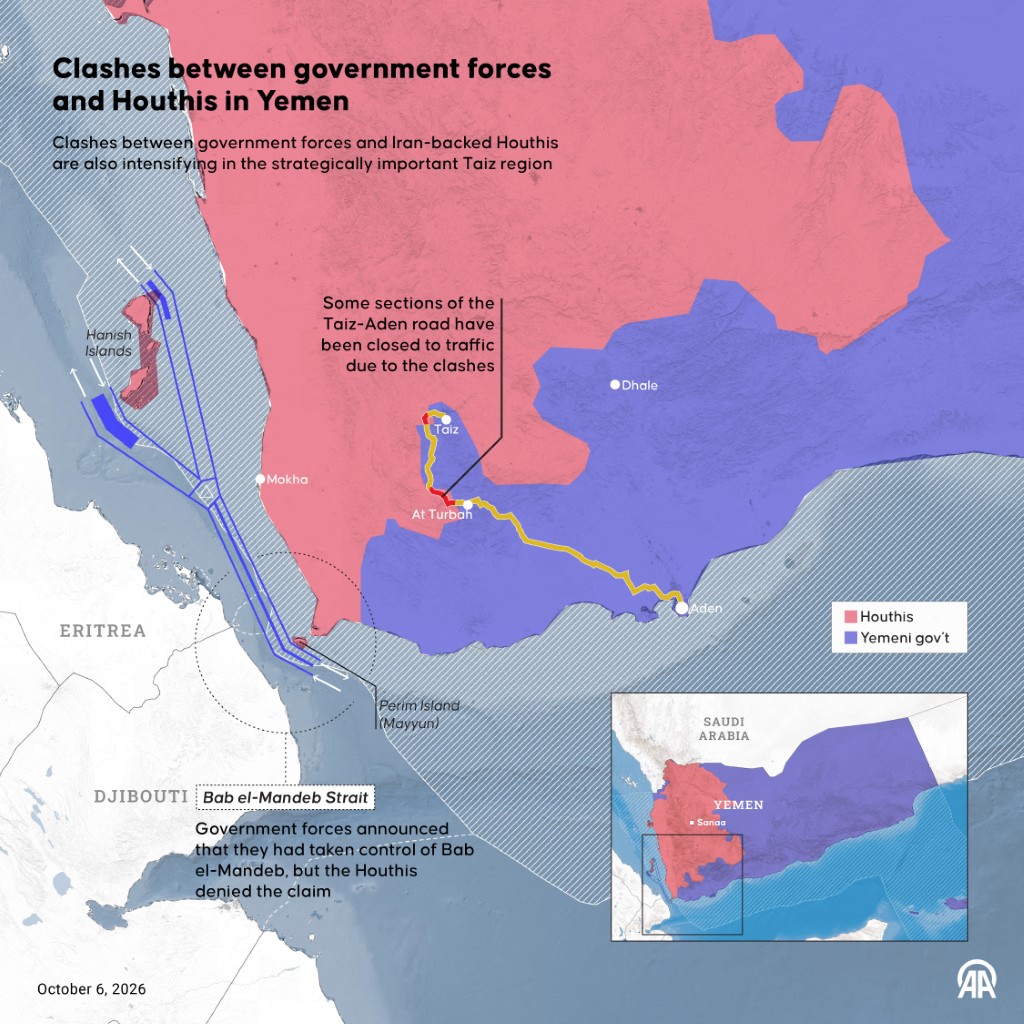
An alliance activated for the first time The geopolitical landscape of the Middle East is undergoing a profound transformation as the Yemen issue within the Mecca Pact officially shifts from a theoretical security agreement to an active military operational plan. Following a major Houthi strike near the holy city of Medina and aggressive advances by the group along the strategically vital Red Sea coast—advances that have been reversed in recent days—Saudi Arabia, Turkey, and Pakistan convened an emergency meeting in Riyadh on October 5, 2026. This critical gathering triggered the first-ever invocation of the alliance's mutual defense pact since its initial signing in August 2026, marking the start of concrete military coordination and a series of military deployments: Pakistani forces, long deployed on Saudi soil, are set to reinforce their presence, while Turkey, whose involvement had been limited to military advisers, is preparing to send troops. After a hesitant start, concrete commitment This immediate activation marks a decisive turning point, as Turkey and Pakistan had initially been especially hesitant. When it was signed on August 7, 2026, the original text provided very little detail on the actual military obligations of each signatory, initially fueling skepticism among international observers. In the face of the first Houthi missile barrages in September, Ankara and Islamabad had been reluctant to intervene militarily or respond to requests for assistance, preferring not to jeopardize their respective roles as potential mediators in the broader conflict between the United States and Israel on one side and Iran on the other. Saudi Aramco facilities ablaze after Houthi strikes near Riyadh. (AFP) Many experts noted at the time that Pakistan favored mediation over intervention, while Turkey chose to showcase its technological capabilities without formally committing to an open conflict. Furthermore, the lack of a unified military command and the time needed to develop operational interoperability, as with NATO's historical processes, cast doubt on the short-term credibility of this security architecture. Pakistan, the alliance’s manpower pillar However, the severity of the recent direct attacks on Saudi territorial integrity forced both nations to overcome their initial reservations. Already maintaining a permanent presence of more than 15,000 military personnel assigned to training and operational support missions in Saudi Arabia, Pakistan is preparing to deploy a substantial reinforcement of as many as 20,000 to 25,000 additional soldiers, backed by air-defense systems and advanced drone technology. In response to the activation of the Mecca Alliance, these strategic forces are being deployed across several critical areas of the Kingdom: a major component is being stationed at air bases and near infrastructure along the Saudi-Yemeni border, while reinforced security arrangements are protecting energy facilities and the holy cities of Mecca and Medina against the threat of Houthi strikes. At the same time, although Islamabad's official position strictly favors protecting Saudi territory in order to avoid a direct conflict with Iran, Pakistani personnel and advisers operating under contract have also reportedly been present more discreetly in southern Yemen, particularly in Aden, illustrating Pakistan's growing integration into the peninsula's security architecture. Turkey, the technological shield for energy infrastructure For its part, Turkey, which has maintained a contingent of more than 200 military advisers and electronic warfare experts on Saudi soil since 2025, is preparing to significantly expand its presence. Although the exact size of this new military contingent is still to be determined and must be approved by the Turkish Parliament in October 2026, the deployment plans could include the establishment of a permanent Turkish military base in Saudi Arabia. The Turkish armed forces' main mission will be highly strategic and strictly defensive: they will be responsible for protecting and securing four of the Kingdom's most important energy facilities, including major gas and electricity production sites. To this end, Ankara will deploy its own short- and medium-range air defense systems, as well as its most advanced electronic warfare technologies, in order to create a protective denial bubble against the threat posed by Houthi missiles and drones targeting the Saudi economy. A NATO-inspired model and unified command in Riyadh Under this now-activated pact, which will operate according to a collective deterrence model resembling that of NATO—whereby an attack on one member is considered an attack on all—Turkey and Pakistan are deploying forces directly on Saudi soil. To manage this influx of troops and oversee the complex strategic and political coordination required by the crisis, the alliance has formalized its command structure by appointing former Pakistani Army general Lieutenant General Nauman Mahmood as secretary-general. He will direct operations from the alliance headquarters in Riyadh. Objective: break the Houthis' warfighting capacity The Mecca Alliance's immediate operational objective is to systematically degrade and eliminate the Houthis' capacity to wage war, an effort that has already triggered major aerial and technological escalation across the region. The Saudi-led coalition has significantly increased its air support for the internationally recognized Yemeni government's troops, mobilizing an armada of more than one hundred modern fighter jets meeting the most advanced U.S. standards to carry out large-scale offensives that, according to government forces, have already destroyed hundreds of Houthi military targets. Turkey's formal entry, alongside Pakistan, brings NATO's second-largest standing army into this theater of operations, introducing an overwhelming force combining advanced electronic warfare capabilities, cutting-edge drone technology, and formidable defensive power, thereby profoundly altering the balance of power. Limits of the engagement: no ground troops in Yemen Despite this display of overwhelming strength, the alliance still faces deep structural frictions and the long-term complexities of the Yemeni issue. Although the current activation is based on defensive troop deployments within Saudi borders and aggressive air support over Yemen, carried out by the Royal Saudi Air Force, direct air or ground intervention by Turkish or Pakistani infantry in Yemen's mountains remains highly unlikely. Such a move would entail massive domestic political risks for Ankara and Islamabad, while also risking a regional expansion of the conflict involving Iran. The Red Sea: the next front By contrast, the maritime front along the Red Sea is likely to become an extremely active theater of operations; Houthi forces are aggressively pressing toward Taiz in an effort to encircle it, and their return to the vicinity of the Bab al-Mandab Strait remains a possibility if they manage to mount a counteroffensive. Consequently, a coordinated naval effort involving the alliance is highly likely to secure these vital global shipping lanes, especially since the Turkish and Saudi navies are active in the Red Sea and off the Horn of Africa. Shadow diplomacy: the delicate Iranian issue At the same time, the alliance's diplomatic strategy will likely focus on further isolating the Houthis and choking off their logistics. This will require delicate handling, as Pakistan and Turkey must carefully preserve the balance of their diplomatic relations and their shared borders with Iran. This means the alliance will rely heavily on intense behind-the-scenes diplomatic pressure on Tehran to withdraw or reduce its support for Houthi advances. However, Tehran will undoubtedly demand a price, complicating the backchannel process. Toward a controlled military stalemate Recent developments suggest that the Yemen issue will take the form of a massive air and air-defense campaign designed to block Houthi movements and protect Saudi Arabia from reprisals, thereby imposing a stalemate on the ground without becoming bogged down in a prolonged war of attrition.
Opinion
By Jad Akhawi - Published Oct 5, 2026 - 18:01
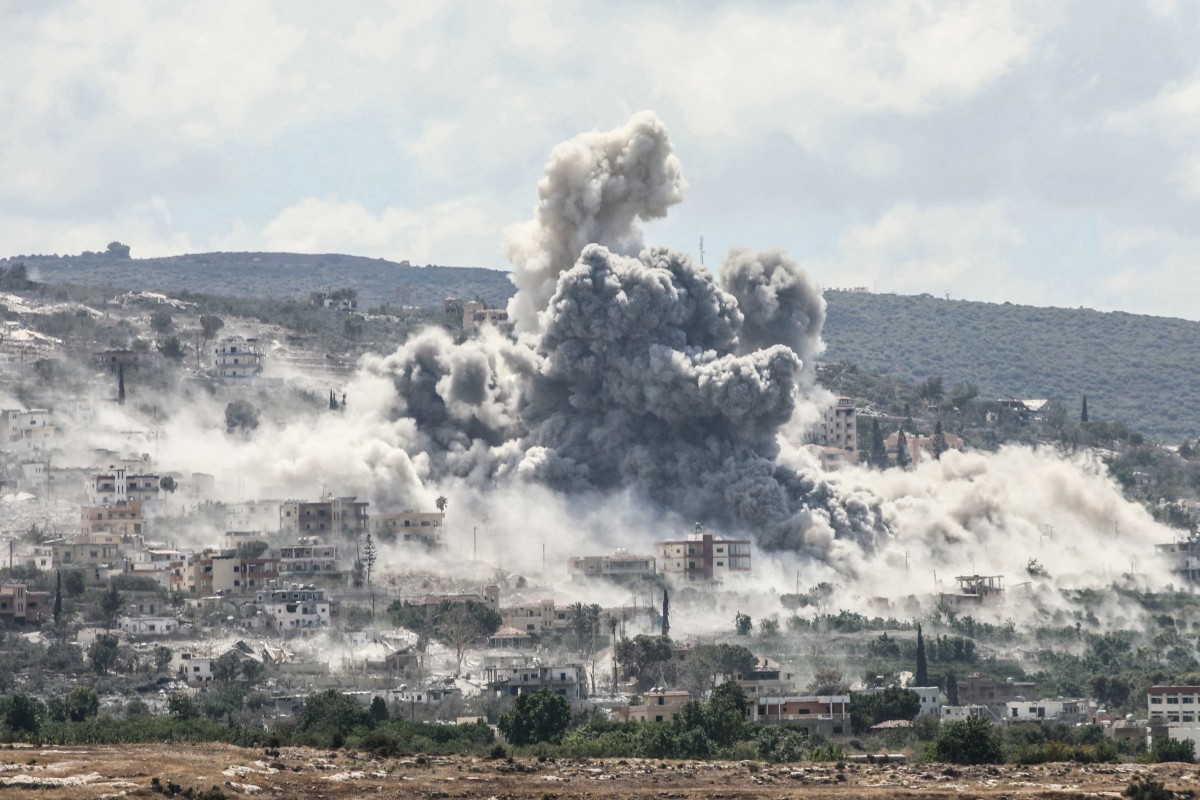
A bulldozer does not debate politics. When it enters a village, it does not ask who supported the war and who opposed it. It does not distinguish between the home of a supporter and that of an opponent. It tears down walls, uproots trees, alters the features of the land, then leaves people facing the simplest and harshest question: Do we rebuild only to wait for the next war? This is the question from which any serious discussion about Lebanon’s future should begin. For many years, we discussed neutrality as though it were an academic idea, or the demand of one Lebanese camp against another. Some saw it as a withdrawal from the Arab-Israeli conflict, while others regarded it as an attempt to detach Lebanon from its surroundings. At times, it was treated as though it were a sectarian project impossible to implement. But after everything that has happened, perhaps we need to pose the question again from an entirely different starting point. Not: do we like neutrality? But: can Lebanon withstand another war? The South Can No Longer Be Subjected to Experiments Anyone visiting the South needs no lecture in geopolitics. It is enough to see a destroyed house. Land torn up by bulldozers. A family waiting to return. A village trying to work out what remains of it. There, the discussion about the region’s rival alignments becomes entirely different. Because, in the end, people do not live inside political statements. People want a home that is not destroyed every ten years, land they can cultivate, a school their children can attend, and a road that does not suddenly turn into a front line. After every war, we promise the people of the South reconstruction. But perhaps the real question is no longer: how do we rebuild? Rather: how do we prevent destruction from happening again? This is where the debate over neutrality begins. Fifty Years as a Battleground Lebanon has not been far removed from the region’s wars for decades. Palestinian weapons entered the Lebanese equation. Then came the civil war. Then the Israeli occupation. Then Syrian tutelage. Then the rise of Hezbollah and the weapons linked to the conflict with Israel and to Iran’s regional strategy. Circumstances and alliances changed, but one thing did not: Lebanon remained a battleground. Every force had, in its own eyes, a convincing explanation for its presence on this land. At every stage, we were told that weapons were a temporary necessity. With every war, we were told that it was exceptional. But the exception lasted half a century. Perhaps, then, the problem no longer lies only in the identity of those carrying weapons, but in our acceptance of the idea that Lebanon’s regional function is to remain an open battleground. What if we said to everyone: enough? The neutrality Lebanon needs is not the neutrality of the weak. It does not mean placing Israel, Iran, Syria and the Arab countries in the same position, nor does it mean giving up Lebanon’s rights or its land. Nor does it mean giving up Palestine, our Arab identity or our political positions. The neutrality in question is simpler than that: Lebanon should enter no war except in defence of Lebanon, and only by a decision of the Lebanese state. To say to Israel: our borders are not open to your attacks. To Iran: Lebanon is not part of your regional military system. To Syria: the time when Lebanon could be used as an extension of your policies is over. To the Arab countries and the West: we are friends and partners, but Lebanon is no one’s base. Is this impossible? Perhaps it is extremely difficult. But is what we have been living through for fifty years any more rational? Neutrality Begins with the State There is one fact from which there is no escape. Lebanon cannot be neutral unless the state has authority over decisions of war and peace. And it makes no sense to ask the world to respect Lebanon’s neutrality while an armed force inside Lebanon is able to make a military decision outside state institutions. This is not an issue directed against a community. It concerns the very definition of the state. The Taif Agreement stipulated the extension of state sovereignty over the entirety of Lebanese territory through its own forces, the dissolution of militias and the handover of their weapons to the state, as well as the strengthening of the armed forces to defend the country. So we do not need to dismantle Taif in order to discuss neutrality. On the contrary. Perhaps we need to implement Taif in order for neutrality to become possible. One state. One army. One decision of war and peace. And What About Israel? This is where the real knot lies. Critics will say, with good reason: how can Lebanon be neutral when Israel attacks its territory? This is a question that cannot be brushed aside. Neutrality does not mean depriving Lebanon of the ability to defend itself. Neutral Switzerland has an army. Neutral states do not relinquish their borders or sovereignty. But the Lebanese experience requires something more. Lebanese neutrality, if it is ever adopted, cannot be a unilateral declaration. It must be part of clear international arrangements that guarantee Lebanon’s borders, sovereignty and security, and tie respect for neutrality to genuine international commitments. In other words, the Lebanese cannot simply be asked to say, “We will not fight,” and then be left alone in the face of any attack. The equation must be reciprocal: Lebanon must not serve as a military platform against others, and others must neither use Lebanese territory nor attack it. We Have a Foundation to Build On The idea is not without Lebanese precedents. The 2012 Baabda Declaration called for Lebanon to be kept out of regional and international conflicts and rival alignments, and the Lebanese state formally referred the declaration to the United Nations. The Security Council later reiterated its call on the Lebanese parties to implement an effective policy of dissociation from external conflicts, specifically invoking the Baabda Declaration. But the Baabda Declaration remained a declaration. That is the lesson. This time, if the Lebanese choose to discuss neutrality, it should not become yet another political statement to be placed in a drawer. What is needed is to think about an international status for Lebanon built on three interconnected pillars: The exclusive control of arms and military force by the Lebanese state. A commitment by Lebanon not to enter regional military conflicts or alignments except in defence of its own territory. And an international and regional guarantee for the respect of its sovereignty and borders, and against its use as a battleground by any party. And Shiites Should Be the First to Discuss Neutrality Perhaps this is the most sensitive point. Neutrality is sometimes presented as though it were a project directed against Shiites or against Hezbollah. That is a major political mistake. Let us ask a different question: Who paid the highest price in the last war and in the destruction of the South? Who lost their home? Who was displaced? Who lost their land, their harvest or their livelihood? Who today lives with the anxiety of returning to a village that could once again become a front line at the first regional explosion? The people of the South are the first to have the right to discuss a different future. That is why the debate over neutrality must not take place over the heads of Shiites, but with their participation. The transition from protecting the community through arms to protecting citizens through the state is not a loss for Shiites. The real test is whether the state is genuinely capable of protecting the people of the South as it protects Beirut, Tripoli, Jounieh and Zahle. Because a state that asks the citizen to give up party-based protection must provide genuine national protection in return. We Are Not Switzerland Some will say: Lebanon is not Switzerland. True. But Switzerland, too, was not born neutral because its geography was easy or because Europe was peaceful. In international practice, neutrality is not merely a matter of political morality. It is a choice grounded in interests, balances, and legal, diplomatic and defence arrangements. Lebanon needs its own model. We can call it neutrality. We can call it neutralisation. We can call it permanent dissociation from conflicts between rival alignments. The name matters less than the substance: That the Lebanese should never again pay the price of a war they did not decide. A Project Worth Discussing Perhaps this should become one of Lebanon’s projects for the next phase: Lebanon as a neutral state under an international guarantee. Not a decision imposed by one camp on another. Not a project against Hezbollah. Not the victory of one alignment over another. But a historic Lebanese settlement declaring that the experience of Lebanon as a battleground is over. Hezbollah itself, along with all Lebanese political forces, should be part of this discussion, because the transition from a phase in which weapons remain outside state control to one in which the state alone controls them cannot succeed if it turns into a project of revenge or humiliation against a community or a group. What is needed is not for one Lebanese to defeat another. What is needed is for the state to defeat the logic of the battleground. What Is Left for Us to Try? We tried war. We tried militias. We tried occupation. We tried tutelage. We tried regional alignments. We tried deterrence. We tried the “balance of terror.” And we tried reconstruction after every round. Each time, the Lebanese paid the price. Perhaps the time has come to try something we have never truly tried: To live in a normal state. A state that does not ask its children to die for regional maps. A state whose villages do not become messages exchanged between the region’s capitals. A state in which the army is the army, the borders are the borders, and war is a national decision, not a regional one. After all this destruction, after the homes that were blown up, the land torn up by bulldozers, and the people who were displaced, perhaps the question is no longer: Can Lebanon be neutral? The harsher question is: If we reject neutrality, what is the alternative? Do we rebuild the South once again, plant the trees once again, repair the homes once again, then wait for the next war? Or do we dare, for once, to change the equation itself? Lebanon has tried being a battleground for half a century. Perhaps it is time for it to try being a homeland.
Strategia
By Khalil Helou - Published Oct 5, 2026 - 14:30
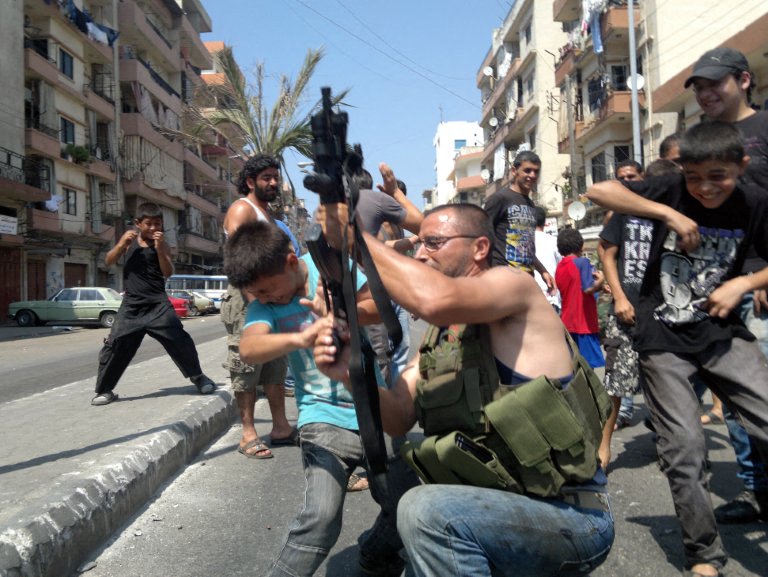
This series of articles offers a clearer understanding of the current situation on the Lebanese scene in light of the recent past, steering clear of the impassioned, ideological, or romantic narratives that overlook realities and leaving readers to draw the necessary conclusions. The previous eighteen installments revisited the events surrounding Hezbollah’s rise to power, from the Taif Agreement to the beginning of its military intervention in Syria alongside Bashar al-Assad’s regime. Adopted unanimously on June 11, 2012, at a meeting of political leaders held at the Presidential Palace, the Baabda Declaration was intended to preserve Lebanon’s stability and shield it from the spillover of the Syrian civil war onto its territory. Sectarian armed clashes had already broken out in Tripoli between supporters and opponents of Bashar al-Assad’s regime, while the infiltration of weapons and anti-Assad fighters from Lebanon into Syria raised fears that the country could once again descend into civil conflict. In the face of this threat, the president at the time, General Michel Sleiman, played a decisive role as initiator, mediator, and guarantor: he urgently convened the National Dialogue Committee in order to defuse the crisis and establish the principle of keeping Lebanon at a distance from regional conflicts. Through sustained personal efforts, he also drafted the Baabda Declaration, an official document that would be recognized by the Arab League and the United Nations. Having become the symbol of his presidency, the Declaration, which he defended vigorously, brought him into a sharp confrontation with Hezbollah, which was already militarily engaged in Syria. The text was unanimously approved by the National Dialogue Committee, which brought together the March 8 camp—particularly Hezbollah, represented by Mohammad Raad; Nabih Berri’s Amal Movement; Michel Aoun’s Free Patriotic Movement; and Emir Talal Arslan—the March 14 camp, including former Prime Minister Fouad Siniora, Walid Joumblatt, and former President Amine Gemayel, as well as the then-prime minister, Najib Mikati, as a non-aligned participant. The June 11, 2012 session was nevertheless marked by several notable absences, particularly that of Saad Hariri, leader of the Future Movement, who was then in exile for security reasons, and that of Samir Geagea, leader of the Lebanese Forces, who boycotted the meeting to express his skepticism about Hezbollah’s genuine willingness to honor its commitments. The main provisions of the Baabda Declaration The Baabda Declaration makes the principle of Lebanon’s disengagement and neutrality from regional and international conflicts a cornerstone, keeping it out of bloc politics in order to preserve its national unity and stability. However, the Arabic phrase used, تحييد لبنان عن صراعات المنطقة, is more nuanced than the concept of neutrality in the strict sense: it refers to a policy of neutrality, rather than absolute constitutional neutrality. The text formally commits all Lebanese political forces to strengthening the national coexistence pact and rejecting both violence and the use of weapons, while affirming the imperative of supporting state institutions, foremost among them the Lebanese army and the judiciary. Lastly, the Declaration calls for strict control of the Lebanese-Syrian border to prohibit the transit of weapons and fighters in both directions, and reiterates Lebanon’s unwavering commitment to international resolutions, notably UN Security Council Resolution 1701. From the end of 2012 onward, however, the March 8 camp began informally distancing itself from it: Hezbollah's increasingly open military involvement alongside Bashar al-Assad's regime effectively violated the text's central pillar—Lebanon's policy of distancing itself from and remaining neutral in the Syrian crisis. The turning point: the Battle of Qusayr The major turning point in Hezbollah's intervention in Syria was the Battle of Qusayr, fought between April and June 2013. Located fifteen kilometers northeast of the Lebanese border, near the towns of Qaa and Hermel, and thirty-five kilometers south of Homs, the city was of paramount strategic importance: whichever force was established there could control the Damascus–Homs and Homs–Tartus routes, thereby threatening to cut off the road linking the Syrian capital to the Mediterranean coast. Some 2,000 rebel fighters were entrenched there, mainly the Al-Farouq Brigades, affiliated with the “Free Syrian Army,” made up of regular army personnel who had defected in opposition to Bashar al-Assad, and supported by the al-Nusra Front. Qusayr was also one of the main entry points into Syria for Lebanese volunteers seeking to join the rebellion. From April 2013 onward, the city was encircled by the Syrian army and Hezbollah, which seized the surrounding villages that had previously been under rebel control. The aim was to completely isolate it from both the Syrian interior and Lebanese territory. The offensive itself began with a swift air and ground assault, before turning into street fighting in which the rebels put up fierce resistance, inflicting heavy losses on Hezbollah, which held the front line. The city ultimately fell to the Shiite party and the regular Syrian army on June 5, 2013. The toll was heavy: 450 rebels killed and 114 Hezbollah fighters—losses acknowledged by the party itself. To justify them, Hassan Nasrallah publicly took responsibility for the involvement, stating that it was part of the fight against fundamentalist groups and the defense of Lebanon. From consensus to repudiation by the March 8 camp The March 8 camp's official political break with the Baabda Declaration came in the wake of the Battle of Qusayr: exactly one year after the text was adopted and one week after the city's fall, on June 12, 2013, Mohammad Raad, an MP and head of Hezbollah's parliamentary bloc, publicly declared that “the Baabda Declaration was stillborn; all that remains is ink on paper.” The statement enshrined the document's rejection by the main component of the March 8 alliance. Hezbollah justified this reversal by asserting that the Declaration had never been intended to hinder the actions of the “Resistance” or call its arsenal into question in the face of external threats, foremost among them the growing strength of jihadist groups in Syria. Michel Aoun followed suit by stripping the text of its substance without ever formally denouncing it: replacing the principle of distancing with that of national security, he argued that the threat posed by jihadist groups infiltrating from Syria had rendered neutrality obsolete. Portraying Hezbollah's involvement as an act of self-defense, he relegated the Declaration to the status of a theoretical, impracticable text. (to be continued)
Composed gaze
By Rami Rayess - Published Oct 4, 2026 - 22:29
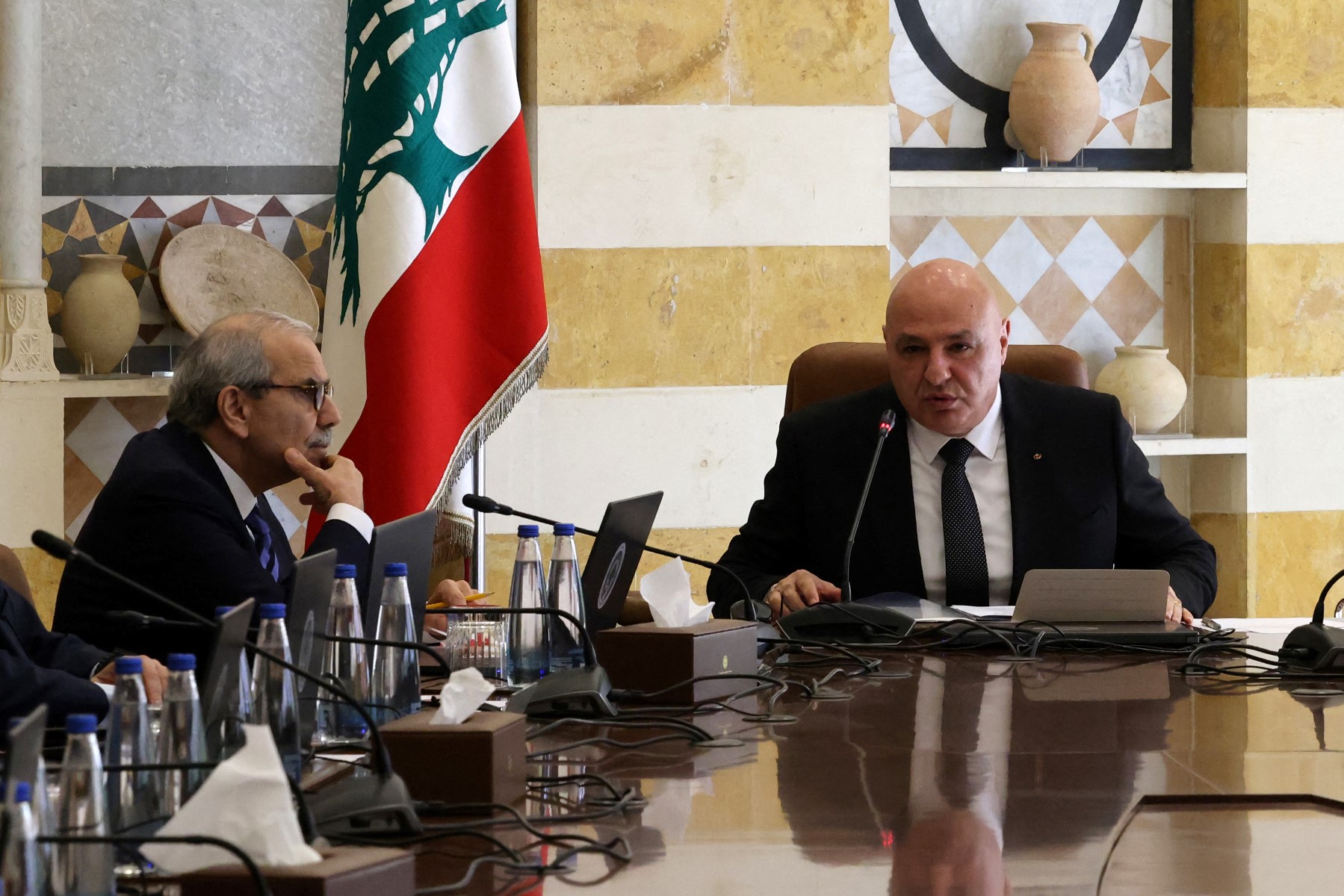
If the Lebanese authorities believe they are mobilizing all their energies and capabilities to address the new reality created by Israel’s occupation of roughly 7 percent of Lebanon’s territory, and making every possible effort to implement the framework agreement signed with Israel and revive the stalled negotiations in Rome or Washington, then they must also seek to devise some form of internal political dialogue, particularly with Hezbollah, which bears primary responsibility for drawing Lebanon into two successive wars, in 2024 and 2026. The Lebanese authorities have set the bar high since the political order was reconstituted with the election of General Joseph Aoun as President of the Republic in January 2025 and the formation of Prime Minister Nawaf Salam’s government in February of the same year. It must be acknowledged that these were goals that could scarcely even have been contemplated a few years earlier, when Hezbollah’s grip on the Lebanese state and political establishment had become deeply entrenched and its military strength had driven it to expand into Syria and become immersed in that country’s complexities and problems. It is worth recalling that the government reaffirmed that weapons must be exclusively in the hands of the state, a demand on which there is almost a national consensus, since it represents the most basic and essential first step toward building the state. The government then went further, deeming the party’s military activities illegal and affirming that its role should be confined to civilian political activity. It also stressed the need to prevent any rockets from being launched from Lebanese territory and called on the security agencies to enforce that decision. Over time, however, and particularly as Iran, the party’s main sponsor, held its ground in the face of the US-Israeli war, the official tone began to shift. This did not mean reversing those fundamental decisions, but rather turning attention to how they could be implemented. If the authorities have now reached the political conclusion that forcibly disarming Hezbollah is, in practical terms, impossible, then Lebanon must break out of this deadlock and engage in dialogue with the party and with Tehran over the future of this arsenal, given the implications it will have for Lebanon’s future. And if Beirut has repeatedly laid down the principle that no one, whoever they may be, should negotiate on its behalf, that is an understandable and commendable position. But it does not mean ignoring the realities on the ground or failing to adopt new approaches different from those pursued during the previous phase. Lebanon may not have much to offer Iran in return for ending its support for Hezbollah. Yet a decision to expel an ambassador that later proved impossible to enforce, which is a problem in itself, may make it necessary to seek other means in this regard. Such a retreat, if it occurs, would not be cowardice. It would be political realism, something badly needed at this pivotal moment. The Lebanese government also needs to develop a comprehensive approach to this issue, one that goes beyond the question of weapons despite its central importance, and to seriously examine how ties between Hezbollah’s community, its social environment and the state can be rebuilt. This constituency has long felt that the state treated it with condescension and indifference and left it facing deprivation. Bridging that gap requires examining ways to gradually integrate social and medical institutions and services. This, after all, is the state’s duty toward its citizens. Such an approach cannot, of course, ignore the party’s members or the question of how to deal with them. They should not be absorbed into state institutions as a single bloc capable of reshaping their internal balances through its political weight and ideological background. Rather, they should be treated as individuals who need new avenues of employment that allow them to live with dignity and move beyond a closed existence defined by weapons and war. This is, of course, an extremely complex matter. But Lebanon is not the only country to have gone through such experiences, even if it has its own cultural and pluralistic particularities. Drawing on the experiences of other countries therefore seems worthwhile in light of the difficulties Lebanon currently faces. What is certain is that the negotiations need to be shaken out of their current paralysis by reaffirming certain national principles that can strengthen Lebanon’s negotiating position, and by opening channels of internal and external dialogue in order to move beyond the impasse and into a new era defined by stability and trust.