Logotipo de Levant Time
Rayyan Al-Basseer

Rayyan Al-Basseer

A Tactical Victory with a Strategic Vacuum
Por
Rayyan Al-Basseer
Publicado
May 25, 2026 - 22:57

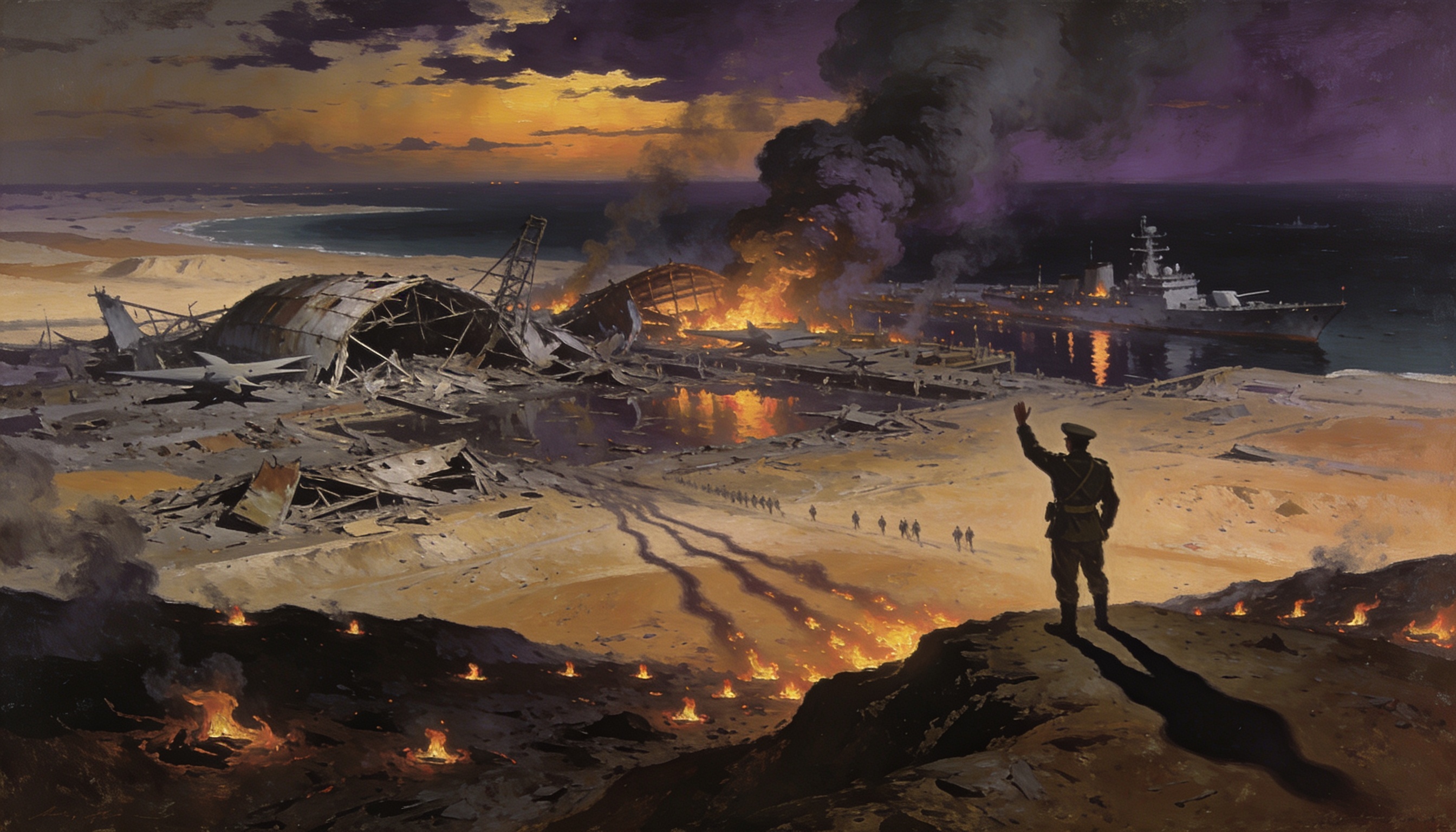
CENTCOM's account of the war on Iran is impressive. The blanks it leaves are the ones that will matter. On 14 May 2026, the Commander of US Central Command stood before the Senate Armed Services Committee and described a war that, in his words, "rolled back 40 years of Iranian military investment" in 38 days. Admiral Charles Bradford Cooper II's account of Operation Epic Fury is impressive by any measure: 85 percent of Iran's ballistic-missile, drone, and naval-defence industrial base damaged or destroyed, 82 percent of its air-defence systems disabled, over 90 percent of its naval-mine stockpile eliminated, 161 vessels sunk across 16 classes, 1,450 strikes on weapons facilities and 2,000 more on command-and-control nodes. "Iran can no longer project power across the region," he concluded.

Is Lebanon back in the crosshairs?
Por
Rayyan Al-Basseer
Publicado
Apr 25, 2026 - 23:38

Over the past three weeks, Lebanon’s negotiating position has shifted quietly but significantly. Direct Lebanon-Israel talks are underway in Washington. These talks are capped by a 10-day ceasefire that began April 16 and was extended by three weeks on April 23 at Lebanon’s own request. The regional and domestic context has changed, but Lebanon’s government has not yet adapted apparently. Outside Lebanon and in the GCC more specifically, there is growing recognition that seeking Hezbollah’s disarmament and a full peace treaty with Israel is no longer realistic. Prominent regional actors assume that pursuing such outcomes now would likely rupture Lebanon internally, reviving sectarian confrontation that they are trying to avoid.

Three Ceasefires, One Pattern
Por
Rayyan Al-Basseer
Publicado
Apr 20, 2026 - 10:00

On 16 April 2026, a ten-day cessation of hostilities between Israel and Lebanon entered into force. It was, by any measure, the weakest agreement Lebanon had ever accepted. Where the UN Security Council Resolution 1701 of 2006 imposed binding and symmetrical obligations on all parties, and the November 2024 ceasefire created a robust monitoring mechanism and precise implementation timelines, the April 2026 instrument imposed an immediate, total, and unconditional obligation to disarm Hezbollah while giving Israel explicit pre-emptive self-defence rights it had never formally possessed before. Something had clearly gone wrong, not in the drafting rooms of Washington or Paris, but in the decades of strategic paralysis in Beirut.

The Fog of Non-Victory (2/2)
Por
Rayyan Al-Basseer
Publicado
Apr 18, 2026 - 01:41

The first part of this analysis established that neither the United States nor Iran emerged from six weeks of war with a strategic victory. This second part examines what that non-outcome means for the actors who must now live with its consequences: Israel, Lebanon, Türkiye, the Gulf states, and the broader Western alliance. What follows is an overview of the contradictions and dangerous calculations now shaping the region's next chapter. Israel: The Permanent Disruption Doctrine The Israeli prime minister entered the Iran campaign as its chief architect and advocate. He exits it under pressure from both directions simultaneously. On one side are military and political hardliners who wanted to continue operations despite the American ultimatum to stand down, and who believe that the ceasefire, like the Yemen deal before it, has left Israel more exposed, not less. On the other side is a reinvigorated opposition that has always described Netanyahu's strategy of permanent escalation without a political horizon as a formula for endless war rather than lasting safety.

The Fog of Non-Victory (1/2)
Por
Rayyan Al-Basseer
Publicado
Apr 16, 2026 - 22:13

The United States decision to launch a major military campaign against Iran was driven by a confluence of pressures. Hawkish figures in the national security establishment had long advocated for decisive action. Pro-Israel lobbying pressed hard for intervention, especially after the June 2025 strikes failed to produce lasting deterrence, and Israel itself had spent months pushing Washington toward a more maximalist posture. These factors created the political conditions for war. Yet the most strategically decisive driver was arguably a logic like the one applied in Venezuela. President Trump’s core objective is not simply to degrade Iran’s military capacity, but to reshape the architecture of global oil transactions — controlling not just who sells crude, but who buys it and under what terms. By sustaining and deepening sanctions pressure on Iranian oil exports, Washington seeks to constrain China’s access to subsidised or discounted crude at a moment when that access constitutes a meaningful input into Chinese industrial and military growth.

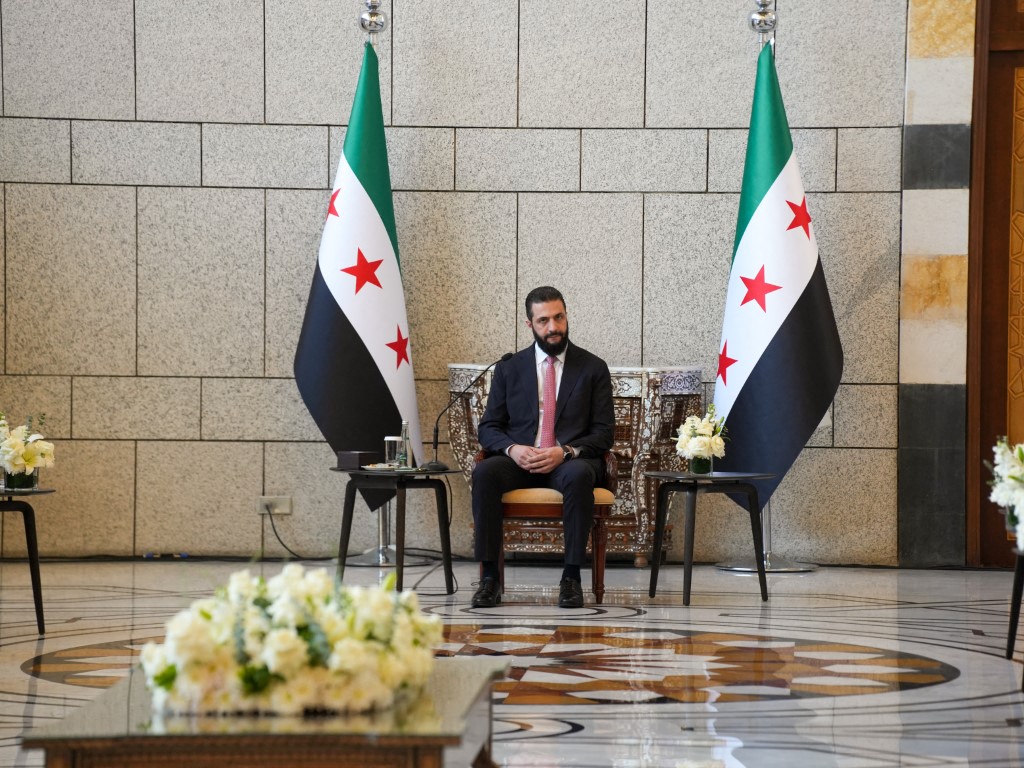
Why Sharaa Cannot—and Will Not—March on Beirut
Por
Rayyan Al-Basseer
Publicado
Mar 22, 2026 - 06:28

From the moment French troops departed Syria in April 1946, the young republic became arguably the most coup-prone country in the Arab world for nearly a quarter century. By 1970, Syria had lived through ten successful coups. On 13 November 1970, Hafez al-Assad carried out a palace coup and installed himself as strongman. For Assad, Lebanon was not simply a neighbor; it is Syria’s backyard and a tool for a stronger regional posture. After the civil war erupted in Beirut, Syria intervened militarily in 1976 — initially against the Palestine Liberation Organization and Lebanese leftist groups, and later in support of these same pro-Palestinian forces against the self-organized Christian groups rallied to defend themselves. From that intervention onward, Syrian intelligence and military apparatuses integrated themselves into the Lebanese political fabric, brokering power by alternately backing, betraying, or preying on local groups.

Libya: Fezzan, a forgotten front line
Por
Rayyan Al-Basseer
Publicado
Feb 4, 2026 - 21:27

While diplomats debate Libya's political future in air-conditioned conference rooms, The persistent fragility of the country's expansive southern region poses significant risks not only to Libya itself, but also to neighboring states, most notably those within the African Sahel. The Fezzan region, spanning one-third of Libya's territory, has become a black hole of governance where state authority has collapsed, armed groups proliferate, and transnational crime networks operate with impunity. The numbers paint a devastating picture. In the Fezzan, 67% of households require humanitarian assistance—the highest rate in Libya. Nearly half resort to crisis-level survival strategies, selling productive assets or forgoing medical care. Youth unemployment reaches 52% in some areas, creating a generation with no stake in stability. Chronic electricity outages last up to 20 hours daily. Maternal mortality rates soar as 73% of health facilities operate only partially, forcing women to deliver at home or travel 150 kilometers for basic care.