Logotipo de Levant Time
Hisham Dibsi

Hisham Dibsi

Fatah Congress: The Year of Palestinian Democracy
Por
Hisham Dibsi
Publicado
May 19, 2026 - 13:11

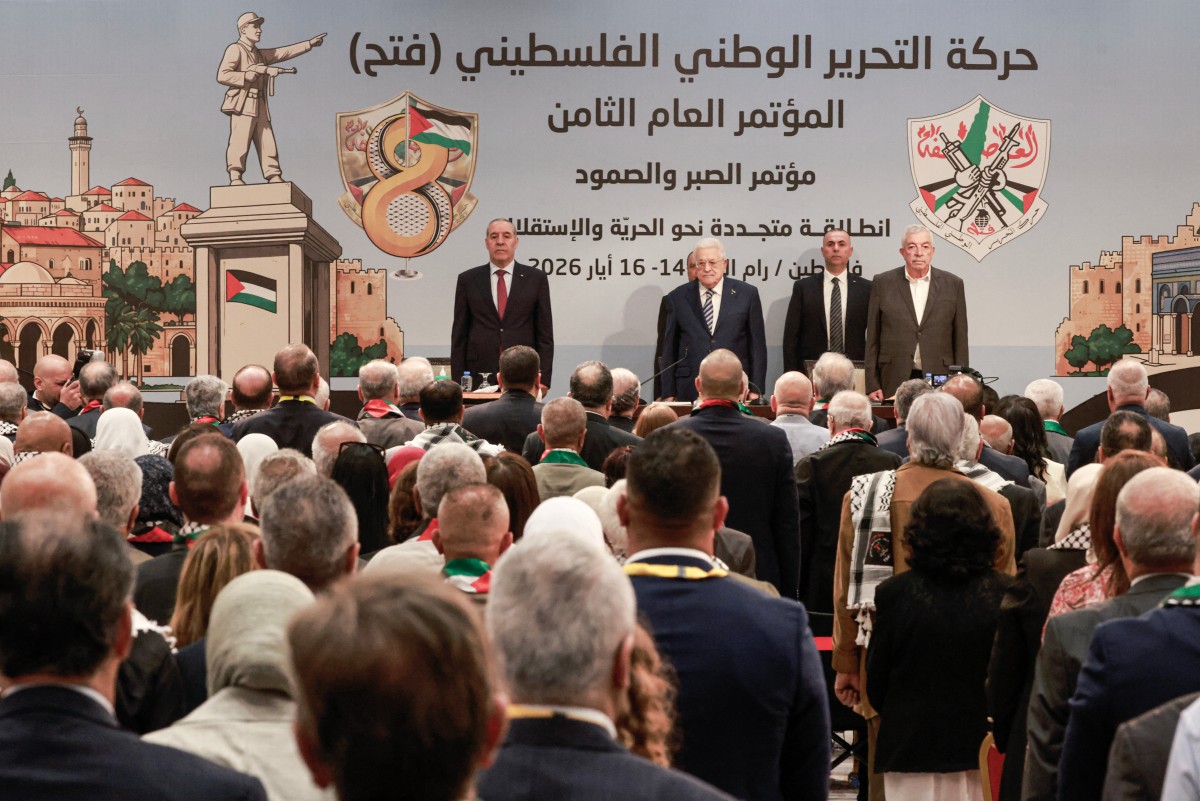
In his opening address to the eighth Fatah congress, President Mahmoud Abbas laid out the official vision of Palestinian legitimacy as it stands today and as it must take shape in the near future, sounding the alarm over the dangers wrought by the continuing war on Gaza, the unprecedented pace of settlement expansion in the West Bank, the relentless Judaization of East Jerusalem, and the Israeli government’s unswerving pursuit of the displacement and ethnic cleansing of Palestinians from their own land — a confluence of threats he described as posing existential risks of an altogether exceptional gravity.
Open War… The Questions of Gazans
Por
Hisham Dibsi
Publicado
May 12, 2026 - 16:44

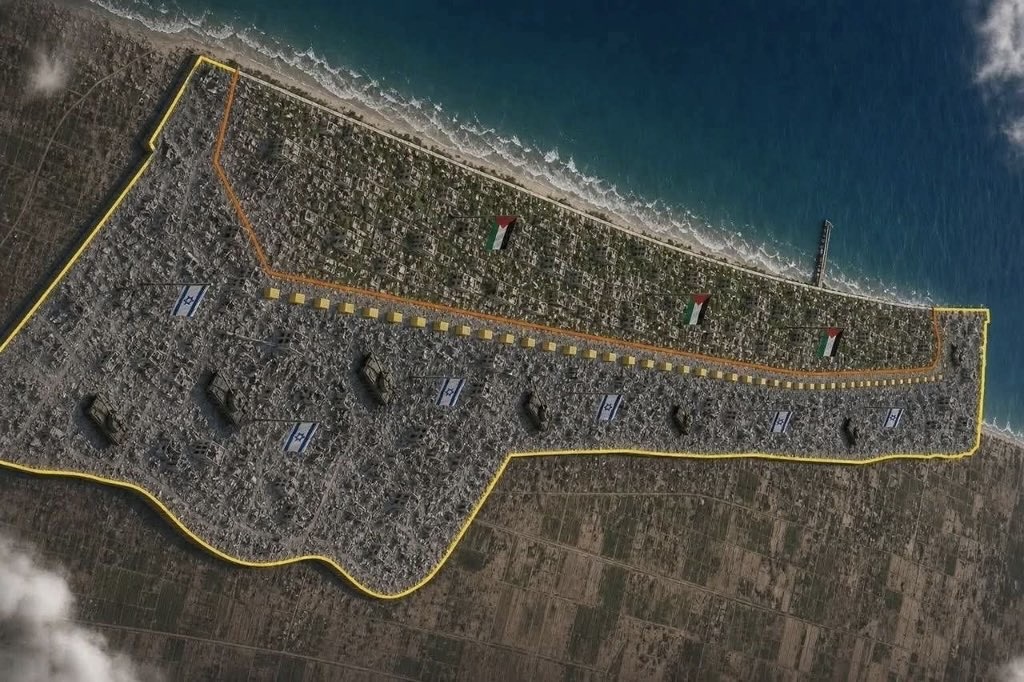
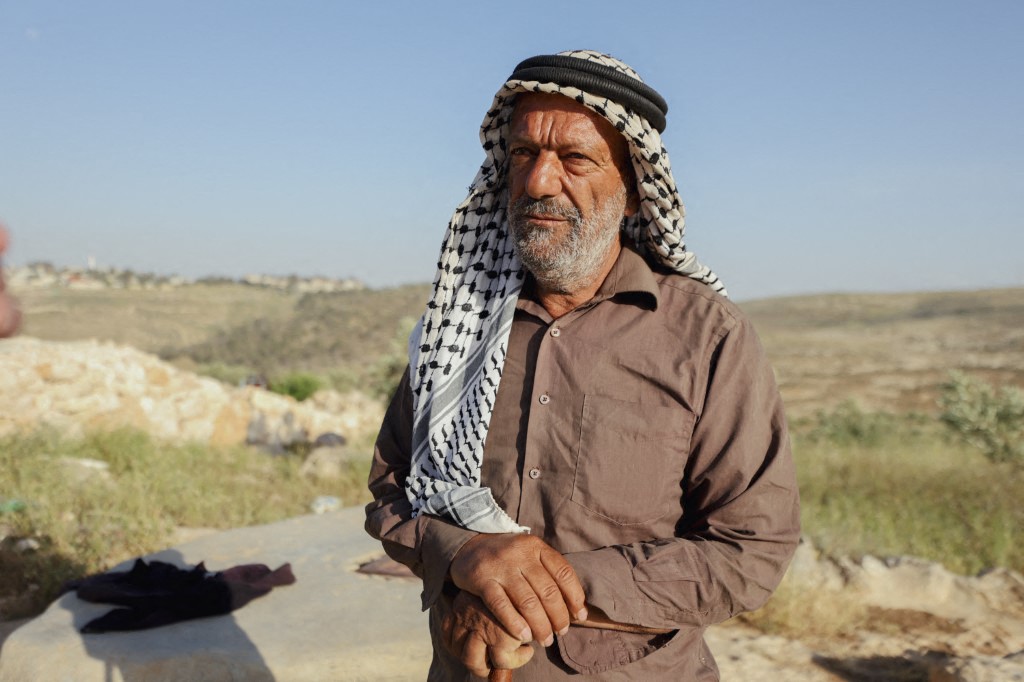
In a remote conversation with an activist who had taken part in the local and municipal elections of the city of Deir al-Balah, he disclosed the personal reasons that had led him to vote for the first time: he wanted to experience the feeling of equality with the Jewish voter, whose opinion is canvassed every week across all domains of Israeli life. He also expressed a desire to feel some measure of human equilibrium as an original inhabitant of the land, in order to bridge the gap opened by Israel's overwhelming superiority, sustained by its modern army and the Iron Dome that shields it, while the sons of this land possess nothing but the capacity to survive, however great the scale of torment, brutality and humiliation.

Palestinian Elections… "Baqun"
Por
Hisham Dibsi
Publicado
May 4, 2026 - 07:31

In the aftermath of the October 7 operation, which the Hamas movement named the “Al-Aqsa Flood,” the Israeli response expanded to encompass collective retribution against the Palestinian people in Gaza and the West Bank, ultimately becoming a war of displacement and extermination. The National Authority in Ramallah adopted the demand for international protection and raised a one-word slogan — “Baqun,” We Remain — to break the Israeli savagery backed by certain Western states and to resist the ethnic cleansing aimed at driving the population toward the Sinai desert. Had Egypt and Jordan not taken a firm stand in support of the National Authority and its president Mahmoud Abbas behind this slogan — which remains in force across all political and international forums and gives shape to the Palestinians’ daily life — events might have taken an entirely different turn.

Open War... Mediterranean Europe
Por
Hisham Dibsi
Publicado
Apr 27, 2026 - 05:48

Nazi Germany was indeed defeated, but the victory of the Allied armies does not correspond to the victory of their states, with the sole exception of the United States. This is what the experience of the Suez War demonstrated, which ended with a single statement by the American president, to cite but one example among many. British Prime Minister Winston Churchill was perhaps realistic in accepting the American nuclear security umbrella and the arrangements that came with it, while General Charles de Gaulle chose to bear the burden of an independent course for French policy, a course that reflected the suffering he had endured at the hands of the Allies during the war, namely the marginalisation to which he was subjected despite his exceptional politico-military role. Washington, for its part, offered no resistance to the French ambition and simply regarded it as a state wishing to exercise self-governance in the nuclear domain, nothing more.

Open War... Lebanon’s Chance
Por
Hisham Dibsi
Publicado
Apr 16, 2026 - 19:03

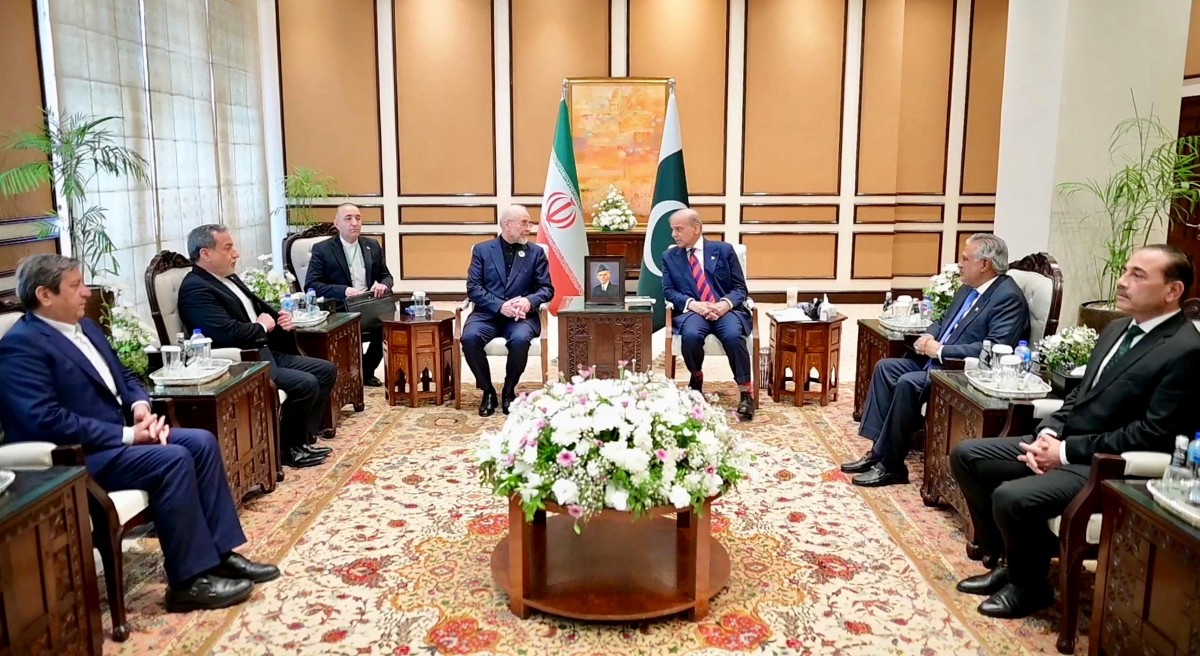
Approaching the negotiation process that concluded in the capital Islamabad as one component of the conflict the two sides wage against each other in multiple forms spares us from evaluating it through the binary of success or failure. The event can instead be illuminated from the angle of the first direct meeting between the Islamic Republic and the “Great Satan,” after nearly half a century of a rigidity that was calculated, and not merely ideological. Whatever the case, the most significant achievement for both sides was the smooth descent from the top of the tree, and the ending of a war that has been devastating for Iran and costly for America.

Open War... The Negotiations, Where to?
Por
Hisham Dibsi
Publicado
Apr 11, 2026 - 16:18

For the first time, China is throwing its full international political weight behind Pakistan, Saudi Arabia, Turkey and Egypt, in order to set the stage for American-Iranian negotiations capable of producing a workable solution on the basis of a ceasefire — not an end to the war, as Iran had demanded. The effort appears to have succeeded, with Islamabad beginning yesterday to host both delegations in the same hotel. This shift in the mediation initiative reflects Beijing's capacity to exert direct influence over Iranian decision-making, and at the same time reveals the convergence of its strategic position with that of the four countries around a shared objective: ending the war without toppling the regime in Tehran and without allowing violence to spiral toward extremities that no actor would be able to control.

The Palestinian Condition… The Diaspora
Por
Hisham Dibsi
Publicado
Apr 6, 2026 - 23:24

The resolution on the partition of Palestine, adopted by the United Nations General Assembly on 29 November 1947 and known as Resolution 181, brought the State of Israel into existence over a territory of fifteen thousand square kilometres, whose population did not then exceed half a million settlers. The same document called for the creation of an Arab state on eleven thousand square kilometres, at a time when the Palestinian people numbered one million four hundred thousand inhabitants. The resolution further provided for the placing of Jerusalem and Bethlehem under international trusteeship. The Arab and Palestinian rejection of this partition triggered the outbreak of the war over Palestine, with consequences that proved catastrophic: Israel was thus able to occupy 78% of the land and compel some seven hundred and fifty thousand inhabitants to leave.

The Palestinian Condition... The "Arabs of the Interior"
Por
Hisham Dibsi
Publicado
Mar 30, 2026 - 04:52

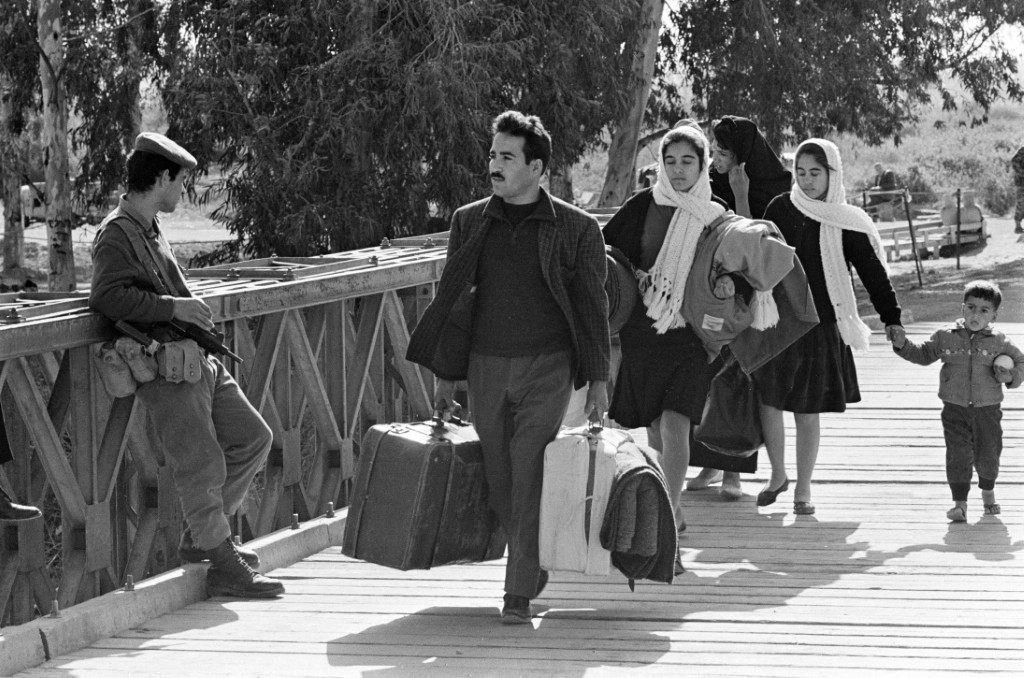
My grandmother Aïcha came into the world in the last decade of the nineteenth century, at the very moment the global Zionist movement was taking shape. Her first two sons were born before the Great War and during it; after the armistice came her daughter and her youngest boy. A year before the defeat of June 1967, she could be found every morning at the saraya of Sidon, happy to have obtained from the International Red Cross authorisation to visit her eldest son Tawfiq, who had become Israeli without ever having left Acre. That authorisation was not enough on its own. For that exceptional event in a life like hers to become possible, she also needed to produce an invitation letter from her daughter Maryam the Jordanian, settled in Nablus in the West Bank under Hashemite sovereignty. But that family visit request was worthless to the Lebanese General Security without a special transit permit she had obtained from her son, a refugee in Damascus, where he had found work and shelter and finally settled.

The Palestinian Situation… the West Bank
Por
Hisham Dibsi
Publicado
Mar 23, 2026 - 17:51

It Was Called Palestine In the aftermath of the First World War, and pursuant to the decisions of the San Remo Conference of April 1920, a new geopolitical entity was proclaimed in the Middle East under the name of the State of Palestine, constituted of the sanjaks of Jerusalem, Nablus and Acre according to the administrative division of the defeated Ottoman Empire, with the addition of the Transjordanian Badiya. The constitution of the State of Palestine was signed on 10 August 1922, and the population census was likewise completed on 23 October of the same year. The League of Nations, designated guardian of human civilization and guarantor of its flourishing, had issued a document specifying the conditions imposed on Great Britain, the mandatory power over the State of Palestine, the mandate being due to enter into force on 29 September 1923 and to expire on 15 May 1948.

The Palestinian Situation… Gaza
Por
Hisham Dibsi
Publicado
Mar 15, 2026 - 13:49

Gaza Is the Future The AI-generated image for the “Gaza Riviera” project captures, in all its seductive beauty, the real-estate imagination of President Trump and his son-in-law Kushner. It stretches across 365 square kilometres of golden sands lapped by the warm waves of the Mediterranean, under a climate that the wealthy of colder countries can only dream of. From this image, only the landowners are missing — people who have no place in the scene to come, not even as cleaning staff or construction workers, much like the recently freed dark-skinned slaves who built and maintained Washington with their muscles and sweat at the time of its founding, and who make up the majority of its population to this day.