
Levant Time logo

Articles

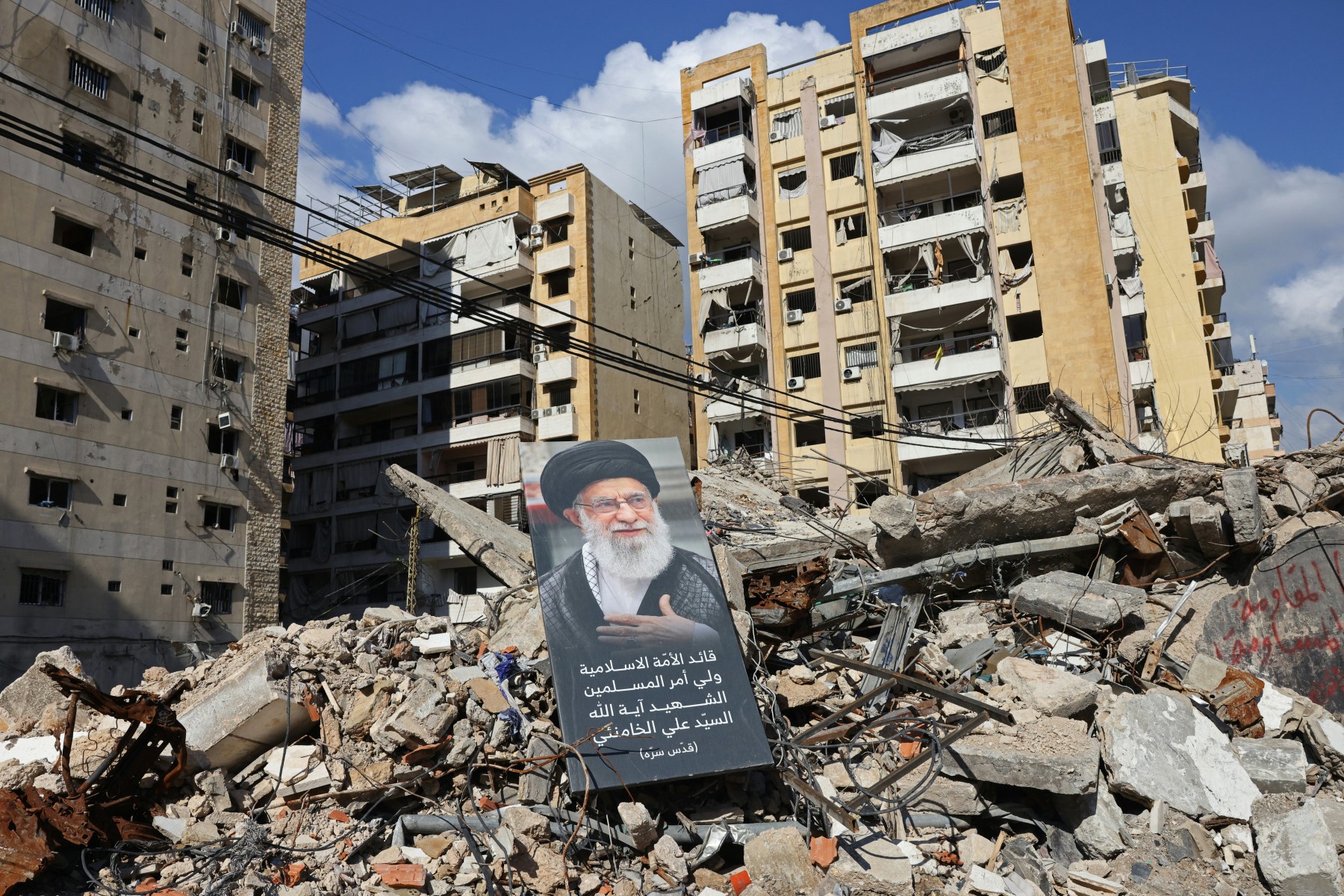
News feature image
Photo ANWAR AMRO/AFP
Analyze
Author portrait
By Sanaa El Jack
Published Nov 26, 2026 - 03:53
When Iran’s influence reached its golden age in Iraq, Yemen, Syria and Lebanon, an Iranian university professor confided to a seasoned Lebanese journalist, in essence, that the Islamic Republic was not merely seeking to export its revolution under the mantle of velayat-e faqih , bring the Shiites of the Middle East under its sway, weaken the religious authority of Iraq’s Najaf in favor of that of Qom, and restore the glories of the Persian Empire. The professor explained that the matter went far beyond this interpretation, as it was rooted in the experience of the Iran-Iraq War, which forced the Islamic Revolution’s first supreme leader, Ayatollah Ruhollah Khomeini, to accept defeat and a ceasefire in July 1988. In other words, to drink the cup of poison.
Today's Essential

Military Justice Defies Hezbollah’s Threats

Arrest warrants issued for five Hezbollah officials detained in the Bcharre highlands
Author portrait
By LevantTime . - Published Nov 25, 2026 - 23:29
News feature image
There is no question that this is another small step along the (rather too long…) road towards reasserting the authority of the central authorities, in all their various components, in the face of militia excesses, security blackmail and the indefensible arrogance emanating from Hezbollah… Despite threats from the pro-Iranian party, Ghada Abou Alwane, the first investigating judge at the Military Court, issued arrest warrants on Wednesday for five Hezbollah officials detained on November 10 in the highlands of Batroun and Bcharre while conducting highly suspicious reconnaissance operations. They were found carrying documents indicating that Hezbollah was planning attacks and, according to some reports, assassinations targeting supporters or officials of the Lebanese Forces in the Bcharre area. Judge Abou Alwane issued the warrants after questioning the five suspects for no less than six hours.
Politics
Author portrait
By Ali Khalifé - Published Nov 25, 2026 - 14:12
News feature image
I have read a book by an Israeli author. This is not the first time I have read a book by an Israeli author. In Lebanon, despite the 1955 law prohibiting dealings with Israel, I have managed to obtain books by Israeli authors such as Ilan Pappé and Shlomo Sand, published in Beirut by Lebanese publishing houses. Pappé is sharply critical of the State of Israel and its political system, while Sand challenges the very idea that a single Jewish people has existed throughout history. For many years, Lebanon was under Iran’s considerable influence and Hezbollah’s sway. Books by Pappé and Sand, which lent support to the narrative espoused by the dominant forces in Lebanon, were therefore permitted. You had nothing to fear from General Security, and the military courts would not come after you. Better still, you could openly own a weapon, with the state’s full knowledge, as long as you claimed you intended to use it to fight Israel…
More Articles
Sort By: NewestOldest
The Pope in Lebanon: Without Peace, the “Message-Country” Will Not Survive

Pope Leo XIV is set to bring a powerful message to Lebanon: “Blessed are the peacemakers.” A unifying call, with deep religious resonance, that resonate cross its religious communities, while carrying a clear political weight for a country exhausted by decades of conflict – a nation for whom the time has come to leave the tunnels of violence behind and step into the light of peace. Firstly: Supporting the Christian Presence and Affirming Its National Role This message stems from the Holy See’s careful attention to what Lebanon has endured – and continues to endure – particularly its Christian population. For the Vatican, Lebanon is the most sensitive “laboratory” in the Middle East for Muslim–Christian coexistence, and a potential model of what John Paul II, three decades ago, described as a “message-country.”

/