

Has the United States’ Long-Term Decline Already Begun? (1/2)
By dismantling the international order, America risks shattering its own economy

Following the Allied victory in the Second World War, the United States emerged as a superpower, shaping the course of the Western world. Its vast industrial machine was instrumental in securing the military defeat of fascism. In the first part of this analysis, we examine how the US established its model – not only through military might, but also by creating a new global economic, financial, and institutional order. In a forthcoming second part, we will consider the risks now confronting America.
Many economists and commentators argue that the United States has entered the early stages of a secular decline.
As outlined in the work of Russian economist Nikolai Kondratieff in the 1930s, global history unfolds through long economic and geopolitical cycles. These eras – often lasting between 60 and 80 years – are typically dominated by a leading power and accompanied by major technological revolutions and transfers of global leadership.
From China around the year 900, to the Italian city-states of the Renaissance, to the British Empire under Queen Elizabeth I, successive cycles of world economic dominance have followed this pattern.
The era of American global leadership broadly began after World War II. What we are witnessing today – both domestically and internationally – may be the early signs that this leadership is beginning to unwind within the coming decade.
America’s Rise from “Emerging Market” to “Superpower”
Before World War II, the United States was not yet the unchallenged center of global power. In many respects, it still resembled an emerging economy – powered by a new energy source, oil, and by transformative innovations such as the automobile and the telephone.
It was a land of opportunity, driven by a more liberated entrepreneurial spirit than the dominant British Empire and the mature European democracies. The American model combined a “can-do” mindset, rapid industrial expansion, high growth rates, speculative dynamism, and the typical “risk-taking” investment posture common to emerging economies.
As history repeatedly shows, emerging-market excesses often carry the seeds of their own crises.
That trajectory culminated in the 1929 crash, followed by the Great Depression of the 1930s. At that time, real capital concentration and geopolitical weight still resided in Europe. The United Kingdom remained the anchor of the global order, with the pound sterling serving as the currency of international trade and finance.
World War II: The Great Transfer of Power
World War II changed everything.
Europe was shattered. Asia was devastated. Tens of millions perished. Entire nations – including Germany and Japan – were physically, industrially, and institutionally ruined. The British Empire itself was critically weakened, and the balance of power shifted irreversibly.
America’s initial isolationism, combined with its extraordinary industrial capacity and geographic insulation, allowed it to become the arsenal of the Allied world. The United States supplied everything from grain to cannons, from ammunition to ships and aircraft.
The inflection point came on December 7, 1941, when Japan attacked Pearl Harbor. The United States entered the war, first in the Pacific and then in Europe.
The Allied victories – May 8, 1945, in Europe and September 2, 1945, in Asia – did more than end a conflict. They propelled the United States into the role of the dominant global power, succeeding the declining British Empire.
The Post-War Order: America Builds the System It Will Depend On

British economist John Maynard Keynes addressing the Bretton Woods conference in July 1944, which founded the global financial system with the creation of the IMF and the World Bank. (Staff/IMF/AFP)
Through the Marshall Plan in Europe and a decade of oversight in Japan, Washington positioned itself as the provider of capital, the architect of reconstruction, and the reference model of Western modernity, capitalism, and governance.
But America’s most consequential act was not merely rebuilding economies.
It rebuilt the rules.
The United States constructed an international order rooted in multilateralism, the rule of law, and institutional architecture designed to promote peace, security, and economic cooperation.
Washington played a central role in shaping the institutions that defined the post-war world: the United Nations; the World Bank and the International Monetary Fund; NATO; and regional frameworks such as the Organization of American States. Over time, this architecture expanded to include bodies such as the World Health Organization, UNICEF, the G7, and the G20.
This architecture was not moral symbolism.
It was strategic infrastructure – and it became the scaffolding of American power.
The Fall of Communism Cements America’s Role as the World Leader
The collapse of centrally planned communist economies further consolidated American dominance.
China’s opening in 1978 and the fall of the Soviet bloc in 1989 appeared to confirm the triumph of the American model. Francis Fukuyama famously framed this moment in The End of History and the Last Man as the final form of political and economic organization.
For a time, American supremacy appeared indefinite.
This dominance is often attributed to democracy.
The reality is less comforting.
The United States did not prevail primarily because of its democratic governance model. It prevailed because of the superior efficiency of its capitalist ecosystem, the productivity of private enterprise, and the stakeholder corporate governance system developed in Western Europe as early as 1602 with the Dutch East India Company – a system that is fundamentally not democratic.
America’s economic efficiency won World War II. Conversely, the inefficiency of centrally planned economies doomed communist ideology long before political legitimacy collapsed.

US President Ronald Reagan and Soviet leader Mikhail Gorbachev during a meeting in 1985. (Ann Ronan Picture Library/Photo12 via AFP)
Democracy, as a political system, is structurally inefficient when it comes to long-term planning, structural reform, and strategic trade-offs – whether in the United States, Europe, or many developing nations.
Examples abound: Germany’s abandonment of nuclear energy; France’s and Britain’s repeated failures to reform pensions and healthcare; or America’s lag in building infrastructure.
But the broader argument is even more striking: the phenomenal rise of countries such as China and the United Arab Emirates over the past five decades is almost entirely attributable to their ability to function not as democracies, but as strategic corporations.
They adopted Western private corporate stakeholder governance as their public governance model:
– In China, the people are the “clients” and the Communist Party acts like the “shareholders” of the national enterprise. For the shareholders to remain in power, they need to satisfy the clients – as a private company needs to satisfy its clients to thrive, grow, and remain profitable.
– In the UAE, nationals and residents are the clients, and the ruling Emirati tribes act as the strategic owners of the system.
In both cases, ultimate decision-making power does not sit with clients or voters in a consumer-like relationship. It sits with highly skilled decision-makers who define a vision – and can implement it without being paralyzed by permanent pressure groups or unqualified political bargaining – under the control of their shareholders.
China’s leap forward in technology, infrastructure, communications, research, critical minerals, solar power, electric vehicles, or high-speed rail has everything to do with the state’s ability to dictate industrial priorities and fund long-term national objectives at scale, in research, technology, and infrastructure.
Likewise, the UAE’s rise into a global platform – where capital, entrepreneurship, and talent come to live, invest, and build – stems from proactive policies designed to create a stable, safe, tax-friendly environment for entrepreneurs, wealthy individuals, skilled workers, and researchers from more than 200 nations.
Democracy Sometimes Elects Its Own Destroyers
There is another, darker flaw inside democratic systems.
Democracy can enable authoritarianism – not by force, but by consent.
It allows demagogues to rise to power through the mechanics of elections, often by inflaming sentiment, fear, identity, and resentment. Then, once in office, they twist institutions and weaken counterpowers until democracy becomes procedural theater.
From Hitler to Mussolini to Franco; from Erdoğan to Putin – history is clear.
This raises an uncomfortable question: is the United States approaching such a moment?
There are increasing signs that American democracy may now be facing its harshest stress test since its creation in 1776.
When America Turns Against the Order It Built
America’s power was never only military or economic. It was institutional.
The United States embedded its strength into a world order it built through rules, alliances, treaties, and credibility. That system underpinned the dollar, U.S. capital markets, and America’s global leadership.
But the moment the United States begins to treat that order as optional – or worse, as an obstacle to be dismantled – it is no longer weakening its rivals. It is weakening itself.
Donald Trump’s “Make America Great Again” doctrine embraces isolationism and coercion: unilateral tariffs, withdrawals from dozens of international agreements, and sharp restrictions on immigration. These policies are reshaping not only America, but the international system itself.
Here lies the core fault line of modern geopolitics.
The renewed discussion of U.S. claims over Greenland is emblematic. Greenland is not just an Arctic landmass. It is linked to Denmark – a NATO ally – and embedded in the Western alliance framework.
The issue is not territory. It is credibility.
It raises a far more consequential question: has the United States now positioned itself above the rules-based order?
And the moment that perception spreads, the consequences do not remain confined to the Arctic. They reverberate across every contested border, every fragile treaty, every alliance commitment, and every currency regime.
It tells Russia that spheres of influence are legitimate again.
It tells China that coercion is merely the natural expression of power – and that if Washington allows itself to use coercion against its own allies over Greenland, it forfeits the moral authority to deny Beijing the same logic over Taiwan.
It tells middle powers that legal sovereignty is questionable – less a principle than a convenience, as recent events in Venezuela have demonstrated.
And, far more consequentially, it tells America’s own allies that their security, their economies, and their trade ultimately rest not on law, but on the sole will of Washington.
Davos 2026: The Turning Point
Far from leaning into Donald Trump’s negotiating tactics, world leaders finally realized that they could no longer consider the U.S. a reliable partner – economically, militarily, and technologically. And the response was immediate.
On January 27, 2026, the EU and India signed the India–European Union Free Trade Agreement, bringing together two billion people in a trade arrangement covering roughly a quarter of global GDP. Canadian, Australian, and European leaders are flocking to China to secure access to the world’s largest consumer market, and European nations are rethinking their military architecture to reduce their dependence on the US and on NATO.
This is how international orders collapse: through a constant and cumulative erosion of legitimacy – where enforcement power remains, but the moral foundation evaporates.
America’s dominance was never indestructible. It was conditional on one critical asset that cannot be manufactured with military spending or fiscal deficits: credibility.
And credibility, once broken, cannot be rebuilt with slogans.
We may have reached the point of no return…
Next article: Has the United States’ long-term decline already begun (2/2)
The fragility of the economy, a real danger
In Search of Lebanon, from Beirut to the Vatican
UN: Paris Wants to Replace UNIFIL With a 'Different Type' of Presence
The Abolition of the Death Penalty: Ibrahim Najjar and Élie Keyrouz’s Long Fight
The Testament of Hassan Rifai
A ceasefire... yes, but what happens next?
More from Jacques Mechelany
View All


More in Politics
View All



Mexico: after the Elimination of El Mencho, the Calm Before the Storm?

«Remaining»: Rekindle the Memory of the Victims of Political Assassinations Since 2005
Revolutionary Guards, Supreme Organ of Repression
Tropic Thunder: Understanding US Interventionism in the Caribbean
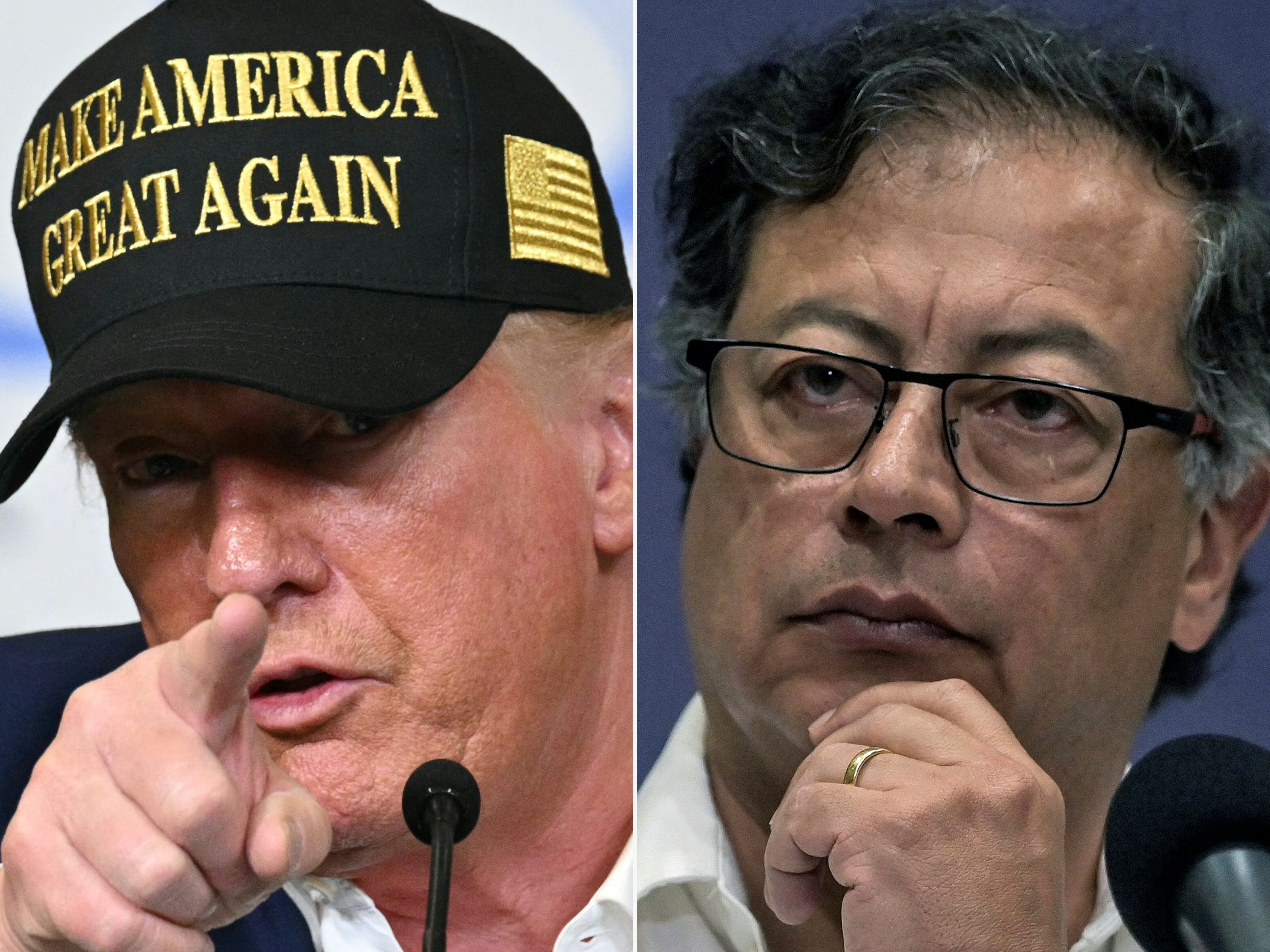
Tropic Thunder: Understanding US Interventionism in the Caribbean
Latest from Levant Time
View All


